


Do Trees Really Explode in Extreme Cold?
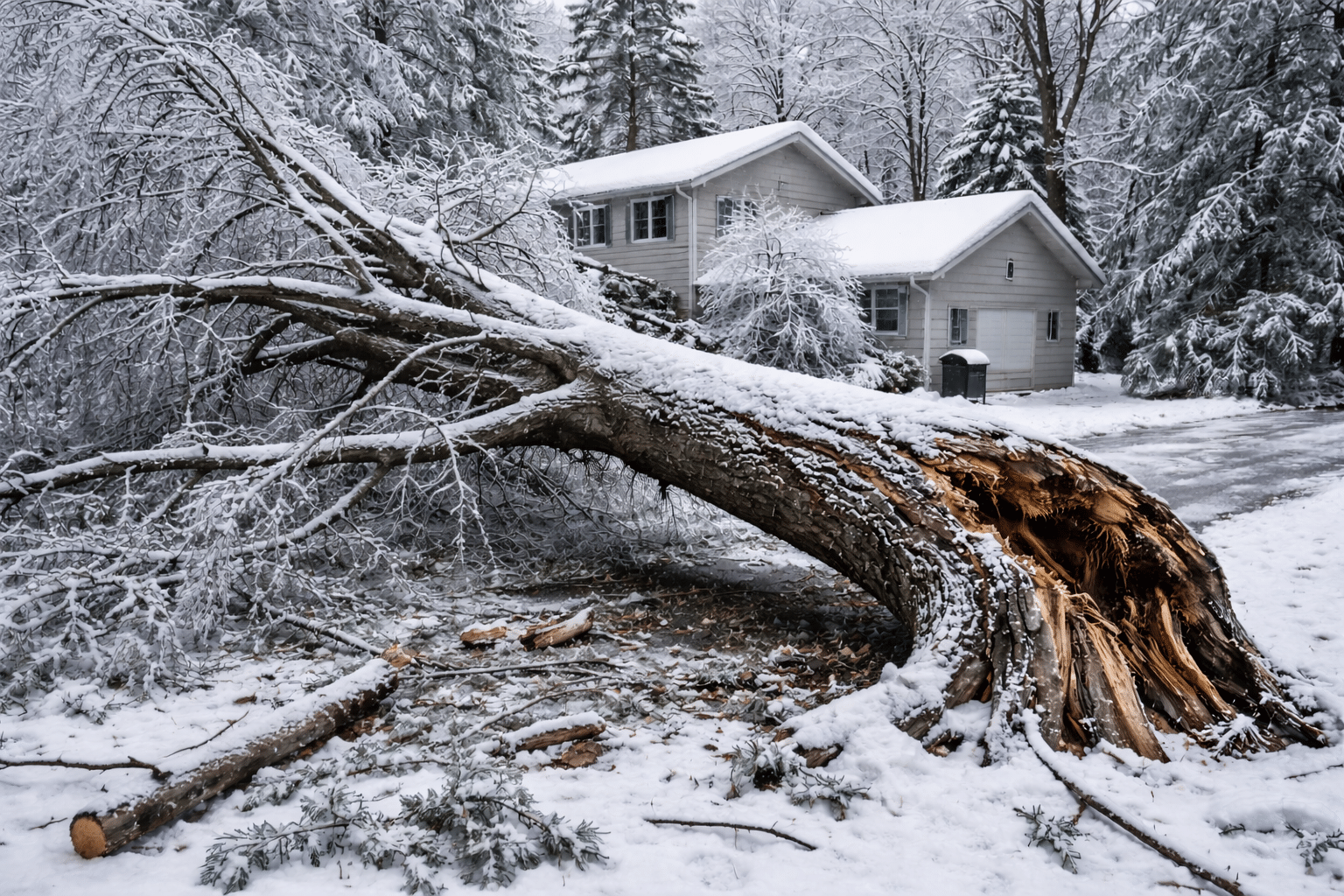
You may have heard stories of trees “exploding” during extreme cold, often described as a loud cracking or popping sound in the middle of winter. While trees do not literally explode, extreme cold can cause sudden splits or cracks that feel just as dramatic. These events are very real and can signal serious structural damage.
Understanding why this happens helps homeowners recognize when a tree has become a potential safety risk.
What Happens Inside a Tree During Extreme Cold
Trees contain moisture within their cells and wood fibers. When temperatures drop rapidly, this moisture freezes and expands. At the same time, the outer bark contracts faster than the inner wood. This difference in movement creates intense internal stress.
When the pressure becomes too great, the tree can crack suddenly. This is commonly referred to as frost cracking or cold splitting. The sound can be sharp and loud, especially during overnight temperature drops.
Why Sudden Temperature Drops Are the Biggest Problem
Trees are more likely to crack when temperatures fall quickly rather than gradually. A warm daytime temperature followed by a sudden deep freeze creates the perfect conditions for internal stress.
Sun exposure can worsen the issue. Trees warmed by sunlight during the day may cool rapidly once the sun sets, increasing the likelihood of cracking along the trunk.
What Frost Cracks Look Like
Frost cracks typically appear as long vertical splits in the trunk. They may start small and widen over time as freezing and thawing continues throughout the winter.
Some cracks may partially close during warmer periods, but repeated cold exposure often causes them to reopen and expand. These cracks allow moisture, insects, and decay to enter the tree, weakening its structure.
Are Frost Cracks Dangerous?
Not every frost crack means a tree will fail, but they should never be ignored. A cracked trunk can compromise a tree’s ability to support its own weight, especially under snow or ice load.
Trees with deep or widening cracks are more likely to shed limbs or fail entirely. If the crack extends through a large portion of the trunk, the risk increases significantly.
Why Branches Become More Likely to Break After Extreme Cold
Extreme cold also affects branches. Frozen wood becomes brittle and loses flexibility. When snow, ice, or wind adds weight, branches that might normally bend can snap without warning.
Dead or weakened limbs are especially vulnerable, turning cold damage into a real safety concern around homes, driveways, and walkways.
Signs Cold Damage May Be a Problem
Homeowners should watch for the following signs after extreme cold:
• New vertical cracks in the trunk
• Bark splitting or peeling
• Branches breaking without strong wind
• Sudden leaning or shifting
• Wood that appears dry or brittle
Any of these signs warrant a professional inspection.
How Tree Service of Troy Can Help
A professional inspection can determine whether a cracked tree can be monitored, stabilized, or needs removal. Trained professionals evaluate the depth of cracks, internal decay, and overall stability.
Early evaluation helps prevent sudden failures later in winter or during spring storms.
When to Take Action After Extreme Cold
If a tree has cracked, dropped limbs, or changed shape after extreme cold, it is best to act sooner rather than later. Cold damaged trees often worsen over time as additional freeze and thaw cycles occur.
Addressing issues early helps protect your property and avoid emergency situations.
Final Thoughts on Extreme Cold and Tree Safety
Trees may not explode, but extreme cold can cause sudden, serious damage that should not be ignored. Understanding how cold affects trees helps homeowners stay alert and proactive during winter.
If you are concerned about cold damage on your property, scheduling a professional evaluation can provide clarity and peace of mind.