


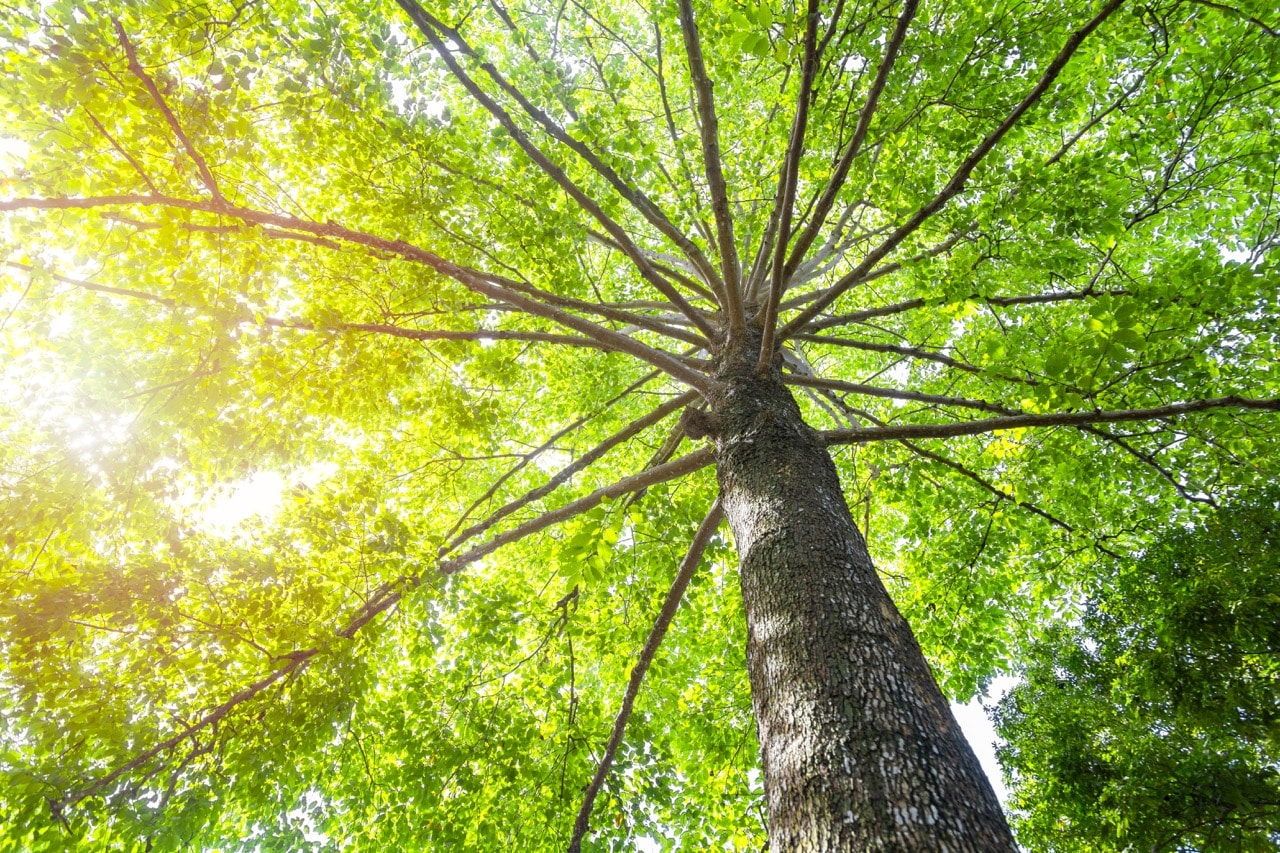
Many trees appear healthy when viewed from the ground. Full canopies, upright trunks, and no obvious dead branches can give property owners confidence that everything is fine. In reality, some of the most serious tree issues are hidden above eye level or inside the tree itself. Professional evaluation goes far beyond a quick visual check, which is why experienced crews take a detailed approach even when a tree looks healthy at first glance.
Why Visual Appearance Can Be Misleading
A tree can maintain a healthy appearance while developing structural weaknesses. Internal decay, cracked branch unions, and compromised roots often progress quietly over time. Weather events, soil changes, and past damage can weaken a tree without immediately affecting leaf growth or overall shape.
Homeowners often call after a branch fails unexpectedly, surprised because the tree looked fine days earlier. A professional evaluation helps prevent these situations.
Examining the Canopy Structure
The first step our crews take is evaluating the canopy from multiple angles. We look for uneven weight distribution, crossing limbs, and branches with weak attachment points. These issues often develop high in the canopy and are not visible from directly below.
We also assess how branches interact with one another. Rubbing limbs, tight growth angles, and crowded sections can lead to long term stress and breakage, especially during storms or heavy snow.
Identifying Subtle Signs of Stress
Even healthy looking trees can show subtle warning signs when examined closely. Discoloration on bark, small cracks near branch connections, or early signs of decay may indicate deeper structural problems.
Our crews are trained to recognize patterns that suggest internal decay or compromised wood strength. These indicators often appear before visible dieback occurs.
Checking Trunk Integrity and Past Damage
A strong trunk is essential to a stable tree. We inspect the trunk for seams, cavities, old wound sites, and areas where bark may be separating. Past storm damage, improper pruning, or mechanical injury can weaken a tree over time.
Even if a wound has closed on the surface, internal decay may still be present. Professional evaluation helps determine whether a tree can safely remain or requires corrective pruning or removal.
Evaluating Root Health and Soil Conditions
Many serious tree failures begin below ground. Roots provide stability and nutrient uptake, yet problems in the root zone often go unnoticed. We look for soil heaving, exposed roots, changes in grade, and signs of root disturbance.
Construction activity, drainage issues, and compacted soil can all affect root health. A tree with compromised roots may appear stable until wind or saturated soil causes sudden failure.
Using Experience and Proper Access
Evaluating a tree properly requires experience and the right equipment. Our crews know where to look and how to assess risk based on tree species, age, location, and surrounding structures. When necessary, we use climbing or lift access to inspect areas that cannot be seen from the ground.
This hands on approach allows us to provide accurate recommendations rather than relying on assumptions.
Turning Evaluation Into a Clear Plan
Once the evaluation is complete, we explain our findings in clear terms. Recommendations may include selective pruning, structural support, monitoring, or removal if safety is a concern. The goal is always to protect people and property while preserving healthy trees whenever possible.
A tree that looks fine from the ground still deserves a professional evaluation. Identifying hidden issues early helps prevent emergencies, reduces long term costs, and ensures trees remain safe and healthy for years to come.