


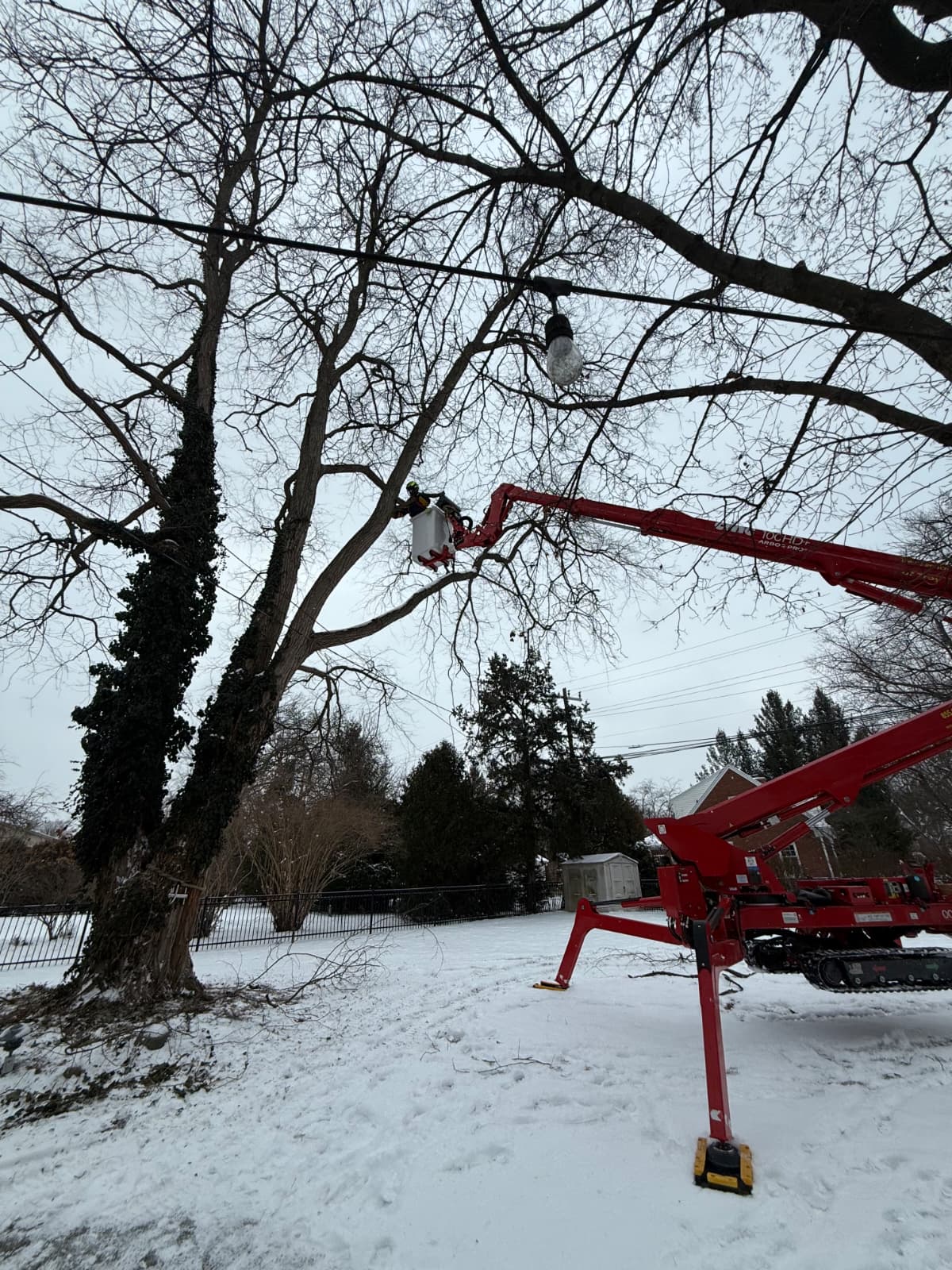
Winter tree removals require careful planning, experience, and precision. Snow, ice, frozen ground, and limited daylight all add complexity to the process. Many homeowners are curious about what actually happens during a winter tree removal and why working with professionals matters. Understanding each step helps set expectations and highlights the value of proper winter tree care.
Initial Assessment and Safety Planning
Every winter tree removal begins with a detailed on site evaluation. Our crew assesses the tree’s size, condition, and location in relation to homes, driveways, power lines, and nearby structures. In winter, we also evaluate snow accumulation, ice buildup, wind exposure, and ground conditions.
Safety planning is critical. Frozen limbs behave differently than they do in warmer months, and ice can change how weight shifts during cutting. Before any equipment is unloaded, the crew establishes safe work zones and determines the best removal strategy.
Preparing the Site for Winter Conditions
Once the plan is in place, we prepare the site. This includes clearing access paths, staging equipment, and ensuring stable footing for the crew. Frozen ground can be an advantage, as it often allows equipment to move with less impact on lawns and landscaping.
We also account for winter specific hazards such as slippery surfaces and reduced visibility. Proper preparation keeps the removal efficient and controlled from the start.
Sectional Cutting and Controlled Removal
Most winter tree removals happen in sections rather than one piece. The crew removes limbs first, working from the top down to reduce weight and maintain balance. Each cut is planned to prevent sudden shifts or uncontrolled movement.
Snow and ice add extra weight to branches, so precise cutting techniques matter. Controlled lowering methods help protect nearby structures and prevent damage to the surrounding property.
Managing the Trunk and Larger Sections
After removing the canopy, attention turns to the trunk. Depending on the tree’s location and condition, the trunk may be cut in sections or lowered carefully using rigging systems. Winter conditions require steady pacing to ensure stability and safety throughout the process.
Experienced crews adjust their approach based on temperature, wind, and ground conditions to maintain control at every stage.
Cleanup and Debris Removal
Once the tree is down, cleanup begins immediately. Limbs, logs, and debris are removed from the site to restore access to walkways, driveways, and yard space. Winter removals often leave less ground disturbance due to frozen soil, which many homeowners appreciate.
Final cleanup ensures the property looks clean and safe once the job is complete.
Post Removal Inspection and Recommendations
After removal, the crew inspects surrounding trees for secondary damage or additional risks. Winter storms rarely affect only one tree, and identifying nearby issues helps prevent future problems.
A winter tree removal from start to finish is a carefully coordinated process. Professional planning, controlled cutting, and experienced execution ensure safety, efficiency, and peace of mind during the coldest months of the year.