


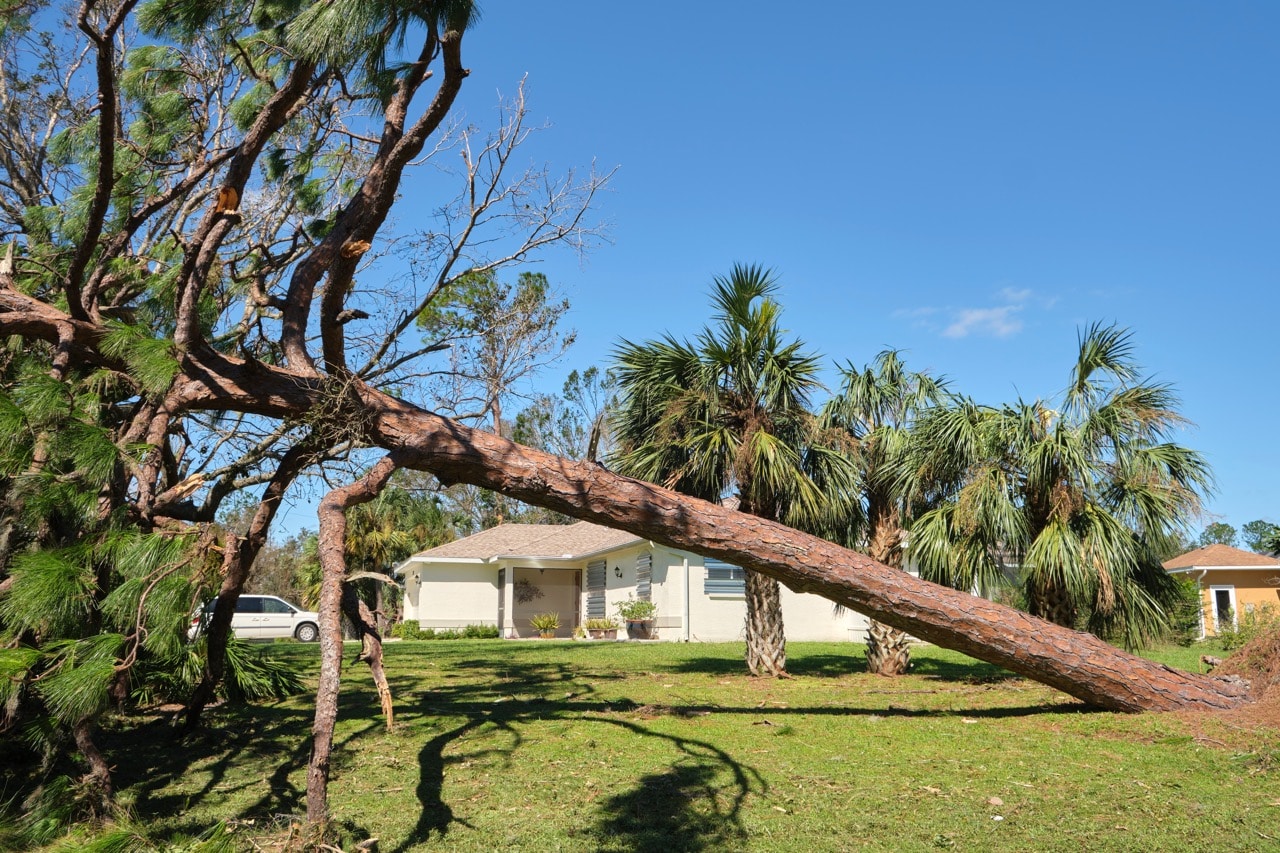
Why Tree Failures Often Happen Without Warning
Many homeowners assume a tree will show obvious signs before it falls. In reality, tree failures often happen suddenly, especially when internal damage goes unnoticed. A tree can appear healthy on the outside while suffering from structural weakness below the surface. Understanding the warning signs can help prevent property damage and safety risks.
Sudden Leaning or Shifting at the Base
One of the most serious warning signs is a tree that begins leaning unexpectedly. While some trees naturally grow at an angle, a sudden change in position is cause for concern. This often indicates root damage or soil instability. If the ground around the base looks lifted, cracked, or uneven, the root system may be failing. Trees with compromised roots can fall without much notice, especially under added stress.
Cracks in the Trunk or Large Limbs
Visible cracks along the trunk or major branches signal internal stress. These cracks may appear as vertical splits, open seams, or lighter colored lines in the bark. Even small cracks can widen over time and weaken the tree’s structure. Trunk cracks often mean the tree can no longer support its own weight, making failure more likely.
Dead or Falling Branches
Deadwood is more than just an appearance issue. Branches that no longer produce leaves, feel brittle, or snap easily are signs that parts of the tree are no longer healthy. Dead branches are often the first to fall, but they can also indicate deeper decay within the tree. Frequent branch drop is a strong warning that the tree needs professional evaluation.
Fungal Growth at the Base or on the Trunk
Mushrooms or fungal growth around the base of a tree usually indicate decay within the trunk or roots. Fungal activity means the tree is breaking down from the inside, reducing its ability to remain stable. Trees affected by internal rot are more likely to fail without clear external warning.
Hollow or Soft Spots in the Tree
Hollow sections in the trunk or large limbs weaken the overall structure of the tree. While some trees can survive with minor hollowing, extensive cavities significantly increase the risk of collapse. If tapping on the trunk produces a hollow sound or the wood feels soft, the tree may already be compromised.
Peeling Bark or Missing Bark Sections
Bark protects a tree from moisture loss and disease. When large sections of bark peel away or fall off, it often signals underlying decay or pest damage. Exposed wood dries out faster and becomes more vulnerable to structural failure.
Soil Movement or Exposed Roots
Roots anchor a tree in place. When soil around the base begins to crack, lift, or sink, the tree may be losing its foundation. Exposed roots or roots that appear broken are serious warning signs. A tree with unstable roots can fall suddenly, even in calm conditions.
Why Professional Tree Inspections Matter
Many of these warning signs are easy to miss without experience. A professional tree inspection identifies both visible and hidden issues before they turn into emergencies. Trained arborists evaluate root systems, trunk strength, and canopy balance to determine whether a tree can be stabilized or should be removed.
Protecting Your Property From Unexpected Tree Failure
Trees that fall without notice often cause the most damage because there is no time to prepare. Recognizing early warning signs allows homeowners to take action before a tree becomes a hazard. Regular inspections and timely maintenance are the best ways to reduce risk and protect your home.
If you notice any of these signs on your property, scheduling a professional assessment can help ensure safety and peace of mind.