


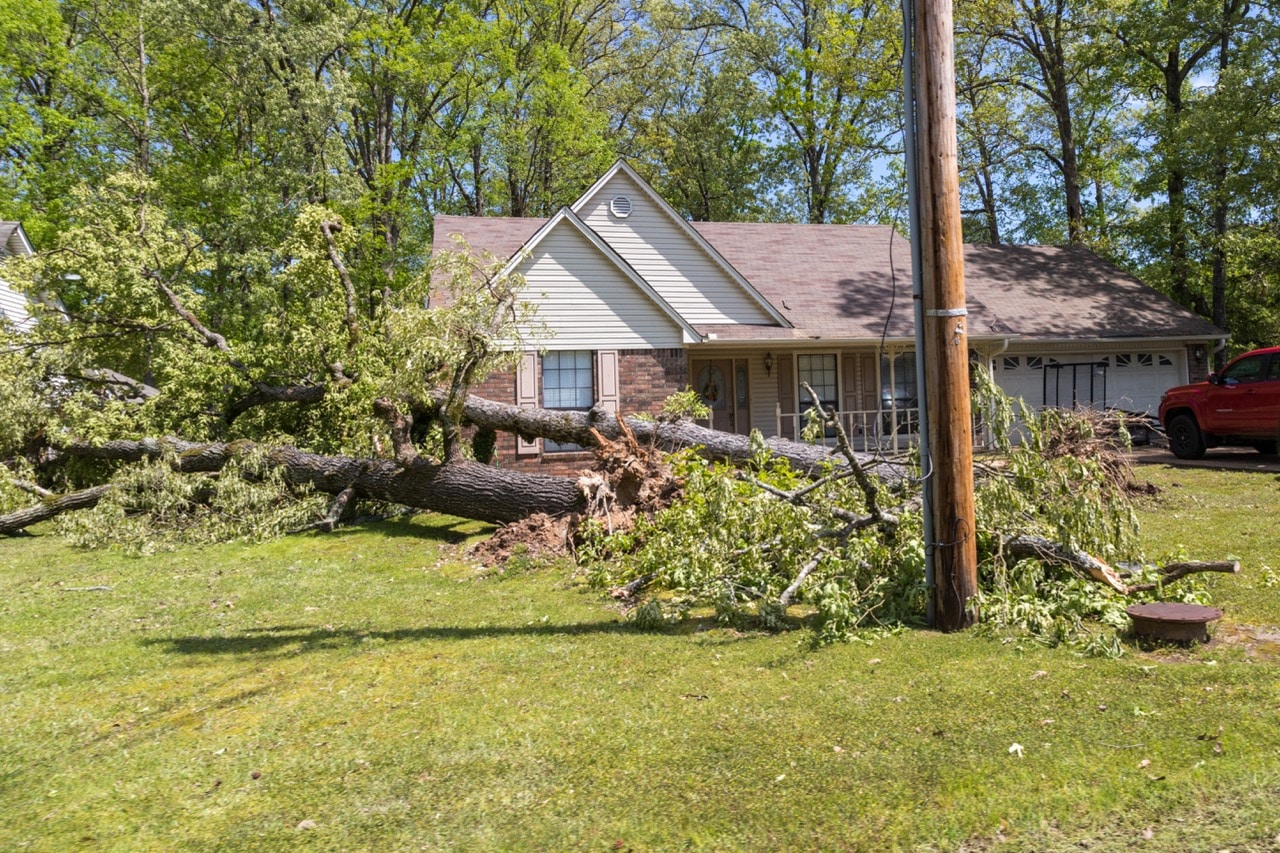
Storm Damage Can Weaken Trees More Than You Think
After a strong storm passes through Southeast Michigan, many homeowners assume that if their trees are still standing, everything is fine. Unfortunately, storm damage is not always immediately obvious. High winds, heavy rain, and ice accumulation can weaken a tree’s structure in ways that may cause it to fail days or even weeks later.
Knowing what warning signs to watch for can help prevent property damage and dangerous situations.
If you suspect storm damage, it is always best to schedule a professional tree inspection service to evaluate the tree’s stability.
1. New Leaning or Shifting
If a tree suddenly begins leaning after a storm, this is a serious red flag. Strong winds can loosen the root system or cause soil movement around the base of the tree.
A leaning tree may continue shifting until it eventually falls, especially during the next storm.
2. Cracks in the Trunk
Large vertical cracks in the trunk are a common sign of internal stress or structural failure. These cracks often appear after severe winds or lightning strikes.
Even if the tree is still standing, trunk damage can weaken its ability to support the canopy.
3. Hanging or Broken Limbs
Storms frequently leave behind broken branches hanging high in the canopy. These are often called “widowmakers” because they can fall unexpectedly.
Removing hazardous limbs safely often requires professional equipment and training.
Learn more about professional tree trimming services that can remove dangerous branches.
4. Exposed Roots
Heavy rain or wind can expose roots near the base of a tree. If you notice soil lifting or roots pulling out of the ground, the tree may be unstable.
Root damage significantly reduces a tree’s ability to remain upright.
5. Sudden Leaf Loss or Dead Branches
If parts of the tree suddenly lose leaves or appear dead after a storm, internal damage may have occurred. Storm stress can interrupt the tree’s ability to move nutrients and water.
6. Splitting Trunk or Major Branches
A split trunk or large branch break often indicates structural failure. Even if the tree does not fall immediately, it may collapse later as the weakened structure deteriorates.
7. Trees Close to Structures
Trees located near homes, garages, fences, or driveways pose the greatest risk if storm damage occurs. Even minor structural damage can become dangerous when the tree is close to property.
In these situations, professional tree removal services may be the safest option.
Protect Your Property After a Storm
Storm damaged trees should never be ignored. What appears stable today could become a major hazard during the next wind event.
Scheduling a professional evaluation ensures that hidden damage is identified before it becomes a serious problem.
Schedule a Storm Damage Inspection
If your trees were exposed to strong winds or severe weather, it is worth having them inspected.
Tree Service of Troy provides professional tree inspections, trimming, and removals throughout Southeast Michigan.
Call (855) 648-7337 or visit treeserviceoftroy.com to schedule your free quote today.