


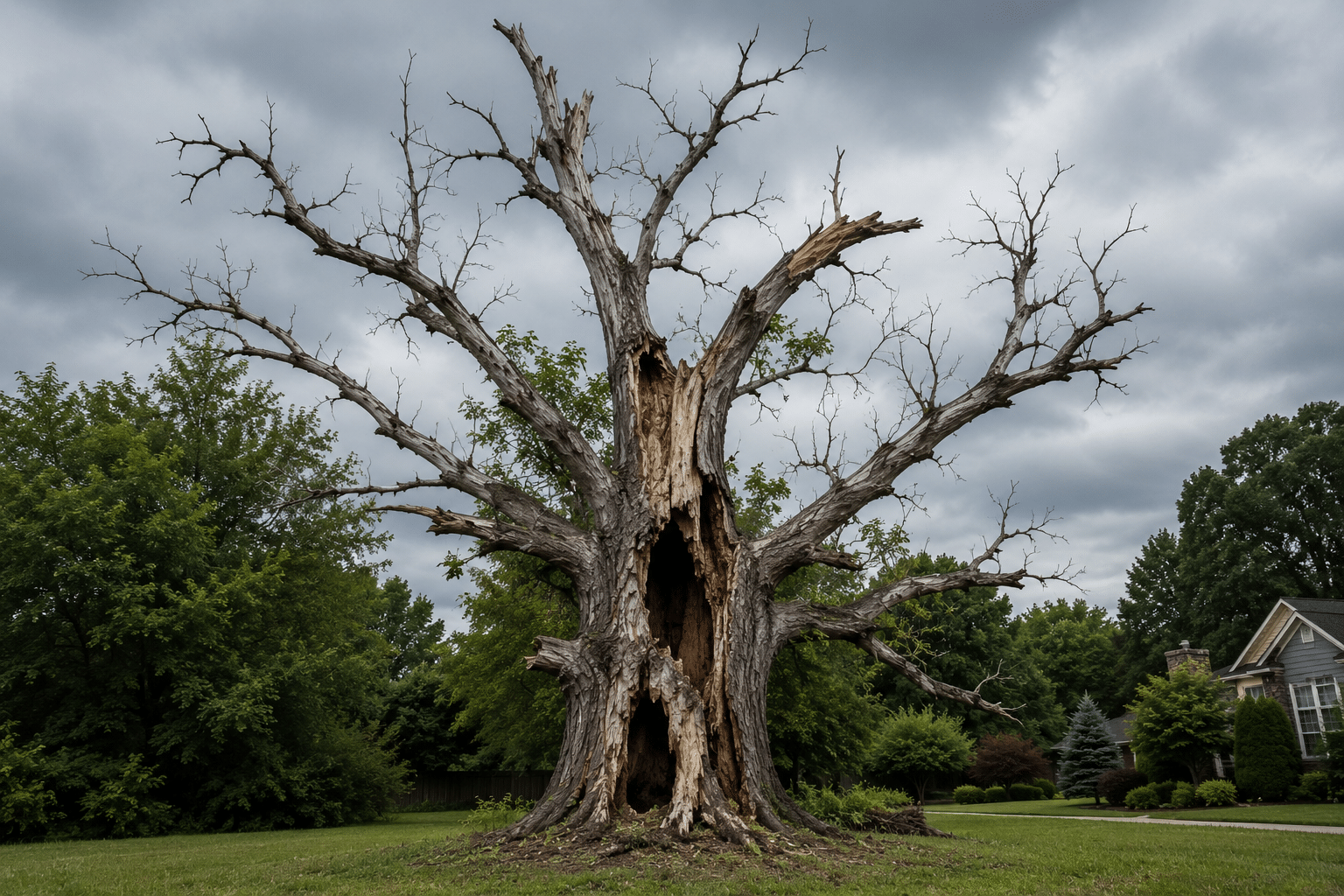
Some trees may appear healthy from a distance while actually being dead or dangerously unstable inside. These are often referred to as “zombie trees.”
Zombie trees can become serious hazards because they may collapse without warning, especially during storms, heavy winds, or snowy conditions. Understanding the warning signs can help homeowners protect their property and avoid dangerous situations.
What Is a Zombie Tree?
A zombie tree is a tree that is dead or dying internally but still appears partially alive on the outside.
In some cases, sections of the tree may still produce leaves while the trunk or root system continues decaying internally. This can make it difficult for homeowners to recognize the danger right away.
Zombie trees are especially risky because they often become brittle and structurally weak over time.
Common Signs of a Zombie Tree
One major warning sign is large dead branches throughout the canopy. Trees that consistently lose branches or fail to produce healthy leaves may be struggling internally.
Cracks in the trunk or large hollow areas are also common indicators of decay.
Another warning sign is fungal growth near the base of the tree. Mushrooms growing around roots or the lower trunk may suggest internal rot.
Leaning trees should never be ignored, especially if the lean appears sudden or has worsened after storms.
Peeling bark, sparse foliage, or sections of the tree failing to bloom may also indicate declining health.
Why Zombie Trees Are Dangerous
Zombie trees are unpredictable. Because internal decay weakens the structure, branches or entire sections may fall unexpectedly.
Dead or weakened trees near homes, vehicles, fences, driveways, or power lines create especially serious risks.
Michigan storms and strong seasonal winds can quickly turn unstable trees into major property hazards.
What Causes Trees to Become Zombie Trees?
Several factors may contribute to internal tree decline.
Disease, insect infestations, storm damage, drought stress, compacted soil, and root damage can all weaken trees over time.
Construction work near root systems may also contribute to long-term decline without homeowners realizing it immediately.
Older trees are naturally more vulnerable, especially if they have not received regular inspections or maintenance.
Can Zombie Trees Be Saved?
In some situations, portions of a declining tree may still be treatable if problems are caught early.
Professional inspections can determine whether trimming, treatment, or risk reduction may help stabilize the tree.
However, severely decayed or unstable trees often require removal to protect nearby structures and improve property safety.
Why Professional Inspections Matter
Because zombie trees are not always obvious, professional evaluations are important when warning signs appear.
Tree care professionals can inspect root systems, structural integrity, branch health, and overall stability to help homeowners understand the level of risk involved.
Routine inspections may also help identify dangerous trees before storms or seasonal weather increase the danger.
For additional tree safety and maintenance information, visit our tree inspection and removal services at Tree Service of Troy.