


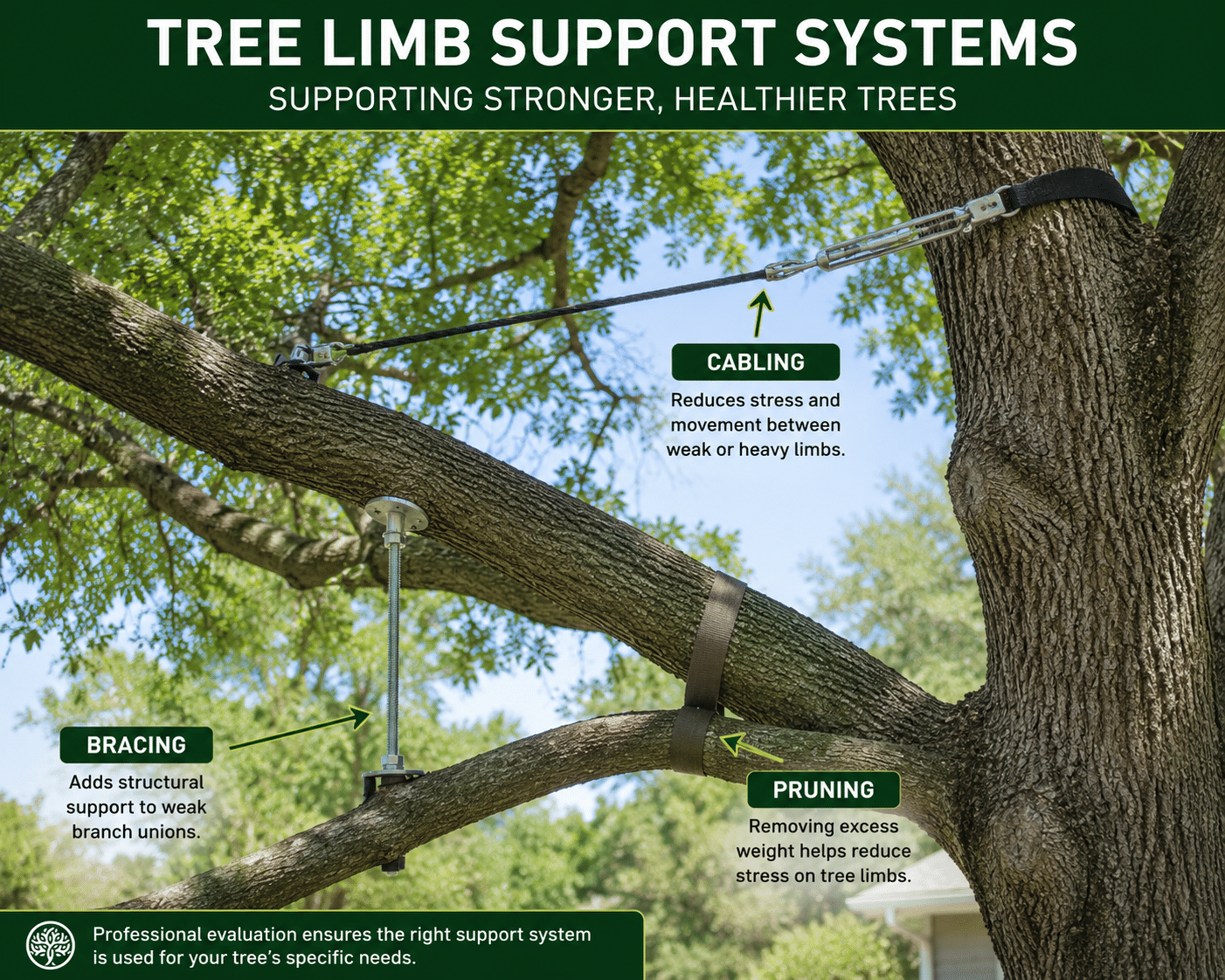
Large or weakened tree limbs can become dangerous if left unsupported. Heavy branches may crack, split, or break during storms, high winds, or periods of rapid growth. Supporting vulnerable limbs can help reduce stress on the tree and improve overall safety.
Knowing when and how to support tree limbs is important for protecting your property and maintaining healthy trees.
Why Tree Limbs Fail
Tree limbs can weaken for many reasons, including:
- Storm damage
- Excessive branch weight
- Poor tree structure
- Disease or decay
- Rapid growth
- Previous pruning damage
Limbs extending over homes, driveways, patios, or sidewalks may create additional safety concerns.
Signs a Limb May Need Support
Watch for warning signs such as:
- Cracks where branches connect
- Limbs sagging downward
- Splitting bark
- Heavy overextended branches
- Sudden leaning after storms
Addressing these problems early can help prevent major branch failures.
Common Tree Limb Support Methods
Professional arborists may use several methods to support vulnerable branches.
Cabling
Flexible steel cables are installed between major limbs to reduce stress and movement during storms.
Bracing
Metal rods may be inserted into weak branch unions or split trunks for added structural support.
Selective Pruning
Removing excess weight from the branch can reduce stress and improve balance.
Each tree requires a different approach depending on its condition and structure.
Avoid DIY Mistakes
Improper support systems can actually damage trees further. Over-tightening cables, drilling incorrectly, or removing too much weight may weaken the tree.
Professional evaluation is important when:
- Large limbs hang over structures
- Cracks or splits are visible
- Trees are mature or historically valuable
- Storm damage has already occurred
A trained tree professional can determine whether support, trimming, or removal is the safest option.
Prevent Future Limb Problems
Routine maintenance helps reduce the likelihood of branch failure.
Helpful maintenance practices include:
- Regular pruning
- Removing deadwood
- Monitoring tree health
- Addressing storm damage quickly
- Reducing overcrowded growth
Healthy trees are generally stronger and more resilient.
Protect Your Property
Weak branches can become serious hazards during high winds or severe weather. Supporting vulnerable limbs early can help preserve tree health and improve safety around your home.
Tree Service of Troy provides tree inspections, trimming, limb support recommendations, and removal services to help homeowners protect their properties year-round.
Learn more at treeserviceoftroy.com.