


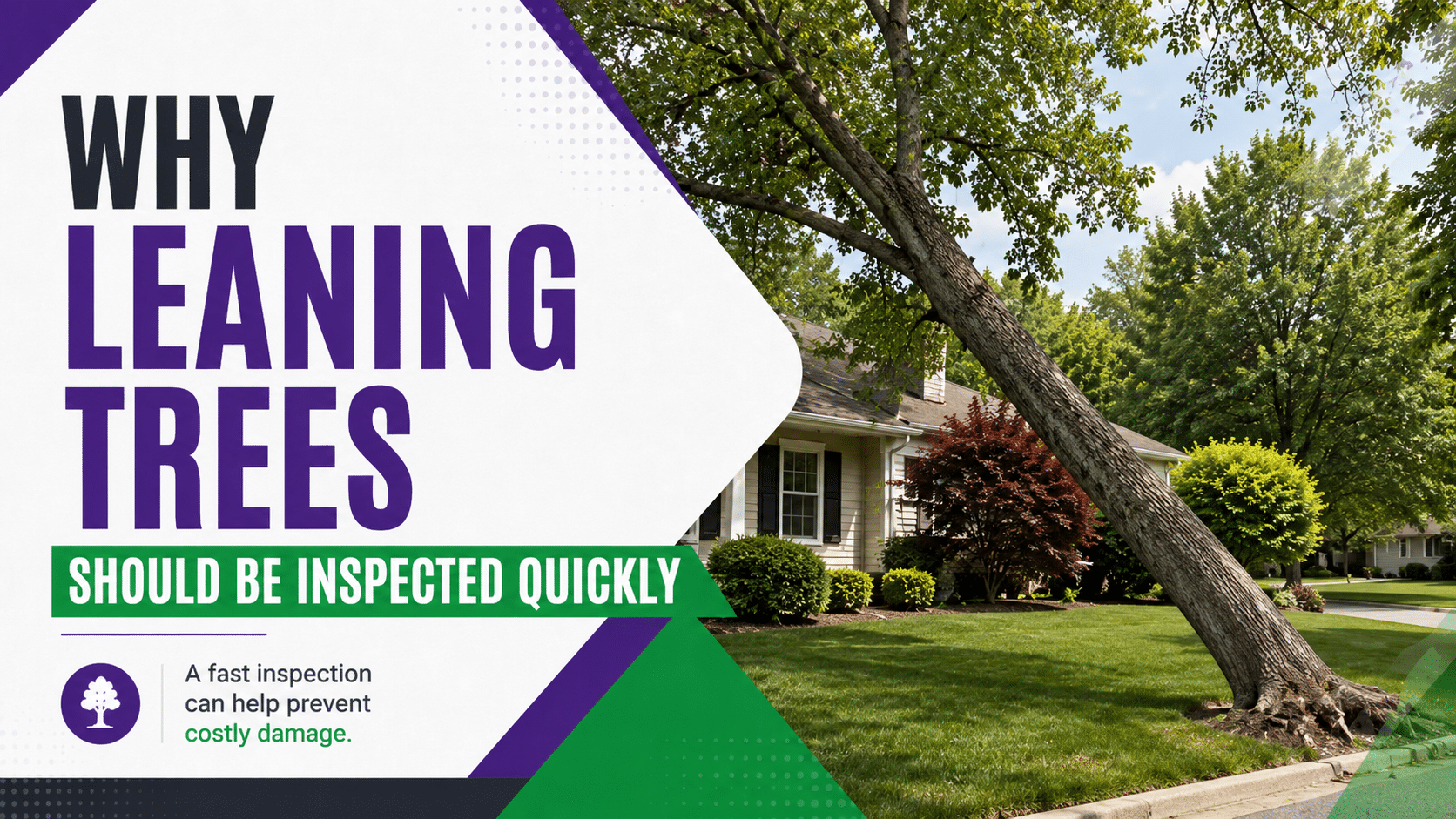
Why Leaning Trees Should Be Inspected Quickly
A leaning tree can be easy to overlook, especially if it has been standing that way for a while. However, not every lean is harmless. In some cases, a leaning tree may be a warning sign of root damage, soil movement, decay, storm stress, or structural weakness. When a tree starts leaning suddenly or appears to be getting worse, it should be inspected as soon as possible.
Not Every Leaning Tree Is Safe
Some trees naturally grow at an angle. If a tree has leaned the same way for many years and shows no signs of stress, it may not be an immediate concern. The problem begins when the lean is new, increasing, or combined with visible damage.
A tree that suddenly leans after heavy rain, high winds, or storms may have suffered root failure or soil shifting. These situations can make the tree unstable and more likely to fall.
Signs A Leaning Tree May Be Dangerous
Homeowners should watch for warning signs around leaning trees. These may include cracked soil near the base, exposed roots, lifting ground, trunk cracks, dead branches, fungus, or splitting bark. If the tree is leaning toward a house, garage, driveway, sidewalk, or power line, the situation becomes more urgent.
Even if the tree has not fallen yet, it may already be compromised. A professional inspection can help determine whether trimming, support, or removal is the safest option.
Storms Can Make Leaning Trees Worse
Southeast Michigan weather can put a lot of pressure on trees. Strong winds, heavy rain, ice, and saturated soil can weaken root systems and increase the risk of falling. A tree that was only slightly leaning before a storm may become much more hazardous afterward.
After severe weather, homeowners should take a careful look at trees near their home. If a tree appears tilted, cracked, or unstable, it is best to avoid the area and contact a professional tree service.
Root Problems Are Often Hidden
One of the biggest concerns with leaning trees is that root damage is not always visible. Roots anchor the tree and help keep it stable. If roots are damaged by construction, soil erosion, disease, or excess moisture, the tree may slowly lose support.
Because root issues happen underground, homeowners may not realize there is a problem until the tree begins to lean or shift. That is why a quick inspection is important.
Do Not Try To Fix A Leaning Tree Yourself
Leaning trees can be unpredictable. Trying to pull, brace, cut, or remove a leaning tree without the right equipment and training can be dangerous. The weight of the tree, direction of the lean, nearby structures, and branch distribution all affect how the tree may fall.
A professional tree service can evaluate the tree and recommend the safest next step. In some cases, trimming may reduce weight. In other cases, full tree removal may be necessary.
Protect Your Home Before The Tree Falls
A leaning tree should not be ignored, especially when it threatens a structure or heavily used area. Acting early can help prevent property damage and reduce safety risks.
For help with hazardous tree removal, visit:
https://www.treeserviceoftroy.com/services/tree-removal-troy-mi/
For storm-related tree concerns, visit:
https://www.treeserviceoftroy.com/services/storm-damage-troy-mi/
Call Tree Service of Troy
If you have a leaning tree on your property, contact Tree Service of Troy for a professional evaluation. Quick action can help protect your home, yard, vehicles, and family from avoidable tree hazards.