


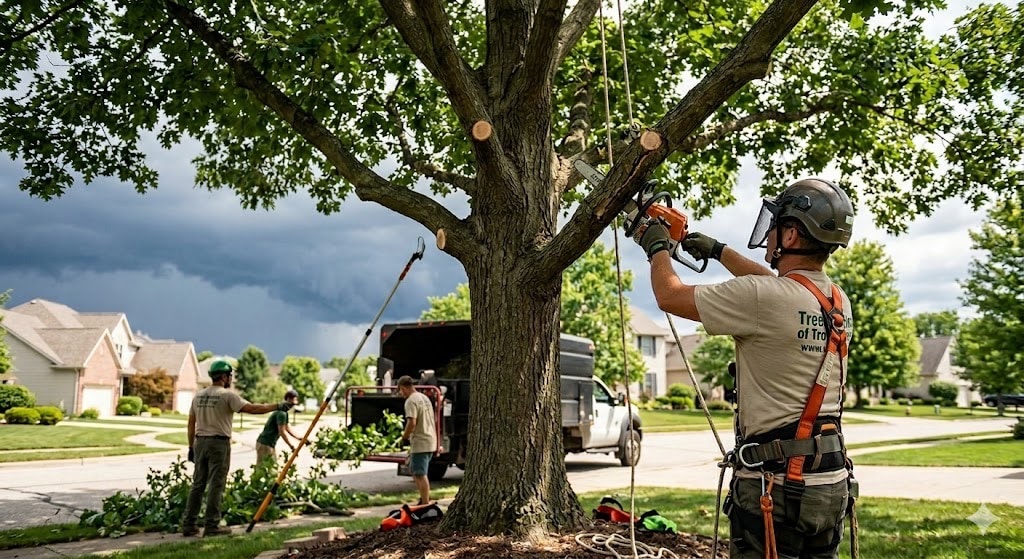
Summer storms can bring high winds, heavy rain, lightning, and sudden changes in weather. While healthy trees are often able to handle ordinary conditions, damaged or unstable trees may become serious property hazards when severe weather arrives.
Preparing your trees before storm season can help reduce the risk of falling branches, blocked driveways, roof damage, and emergency cleanup. A proactive approach also gives homeowners more time to address problems safely instead of reacting after damage has already occurred.
Schedule a Professional Tree Inspection
Many tree problems are difficult to see from the ground. Dead limbs, weak branch unions, internal decay, trunk cracks, and root damage may not be obvious until a storm places additional stress on the tree.
A professional tree inspection can help identify:
- Dead or hanging branches
- Cracks in the trunk or major limbs
- Cavities and signs of decay
- Trees leaning toward homes or driveways
- Branches growing too close to roofs
- Root damage or soil movement
- Storm damage from previous seasons
Catching these warning signs early can help determine whether a tree needs trimming, monitoring, or removal.
Remove Dead and Weak Branches
Dead branches can become brittle and fall without much warning. Weak limbs may also break when summer leaves add weight or when wind moves through a dense canopy.
Professional tree trimming can remove damaged growth and improve clearance around your home, garage, driveway, fence, and outdoor living areas. The goal should be selective pruning, not excessive cutting.
Removing too much healthy growth at once can stress the tree and create weak, fast-growing shoots. Proper trimming should support the natural structure of the tree while addressing specific hazards.
Look for Trees That Are Leaning
Not every leaning tree is dangerous. Some trees grow at an angle naturally and remain stable for many years. However, a new or increasing lean may signal root movement, soil instability, or structural damage.
Warning signs include:
- Exposed or lifting roots
- Cracks in the soil near the trunk
- A sudden change in the tree’s angle
- A lean toward a house, driveway, or power line
- Recent storm damage
- Decay near the base of the trunk
A leaning tree should be professionally evaluated before severe weather arrives.
Check Branches Near Your Roof
Branches that hang over or touch your roof can scrape shingles, clog gutters, damage siding, and increase storm-related risks.
Trimming branches back before storms arrive can help create safer clearance. It can also reduce the chance of leaves and debris collecting in gutters during heavy rain.
Branches near electrical lines require special attention. Homeowners should contact the utility before arranging any work close to power lines.
Protect the Root Zone
Healthy roots are essential for tree stability. Avoid parking vehicles, storing heavy materials, or operating equipment near the base of mature trees.
Soil compaction can limit air and water movement to the roots. Digging, trenching, construction, and changes in soil grade can also weaken the root system.
Mulch can help conserve moisture and protect the soil, but it should not be piled against the trunk. Keep the trunk flare visible and spread mulch evenly around the surrounding root zone.
Know When Tree Removal Is Necessary
Some trees are too damaged, decayed, or unstable to remain safely in place. When a tree presents a serious risk to people or property, professional removal may be the most responsible option.
Tree removal is especially important when a hazardous tree is close to a home, garage, driveway, sidewalk, or frequently used outdoor area.
Prepare Before the Forecast Turns Severe
The best time to address a dangerous tree is before a storm is on the way. Professional inspections, trimming, and removal can help reduce risk and make your property safer throughout the summer.
Tree Service of Troy provides tree trimming, hazardous tree removal, storm cleanup, stump grinding, and professional tree care throughout Troy and surrounding communities. Schedule service early and help prepare your property before severe weather arrives.