


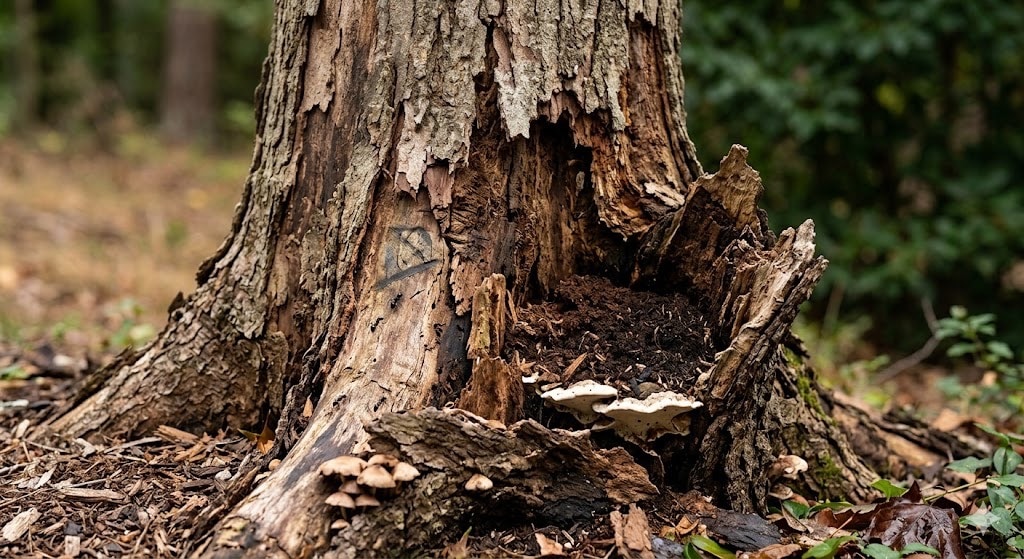
Tree decay can develop slowly and remain hidden for years. A tree may still have green leaves while its trunk, roots, or major limbs are becoming structurally weak.
Because decay can increase the risk of branch failure or a full tree collapse, homeowners should learn to recognize visible warning signs. Early professional evaluation can help determine whether the tree can be managed or should be removed.
Cavities and Hollow Areas
Holes, cavities, and hollow sections may develop after a branch breaks, bark is damaged, or disease enters the wood.
A cavity does not automatically mean the tree will fail. However, its size, location, and depth can affect structural strength.
Cavities near the base of the trunk or at major branch unions may be especially concerning. Avoid filling holes with concrete or other materials, as this does not restore the tree’s strength.
Fungal Growth
Mushrooms, conks, and other fungal growth around the trunk or roots may indicate decaying wood.
Fungi can appear on the outside after internal decay has already developed. Growth near the base may suggest root or lower-trunk problems.
Not every mushroom means the tree is unsafe, but persistent fungal growth should be evaluated professionally.
Peeling or Missing Bark
Healthy bark protects the tissues beneath it. Large areas of missing, loose, or peeling bark can expose the tree to insects, disease, and moisture loss.
Damage may be caused by lawn equipment, vehicles, animals, storms, improper pruning, or disease.
Look for discolored wood, cracks, soft areas, and sections where bark is separating from the trunk.
Dead Branches
Dead branches are one of the most visible signs that a tree may be struggling. They may appear dry, brittle, leafless, or lacking buds during the growing season.
A few small dead twigs may not indicate serious decline, but multiple large dead branches can signal root problems, disease, drought stress, or internal decay.
Dead limbs should be removed before they fall onto roofs, vehicles, walkways, or outdoor living spaces.
Cracks and Splits
Vertical cracks, split trunks, and separations between major limbs can weaken the tree’s structure.
Some cracks are superficial, while others extend deeply into the wood. Cracks that widen during wind, collect moisture, or occur near a heavy branch union require prompt attention.
Soft or Crumbling Wood
Wood that feels soft, spongy, or crumbly may be decayed. Sawdust-like material, loose bark, and insect activity may also be present.
Do not poke deeply into cavities or climb the tree to investigate. A professional inspection provides a safer way to assess the condition.
Root and Soil Changes
Decay can also affect the root system. Warning signs may include:
- Mushrooms near the base
- Lifting or exposed roots
- Cracks in surrounding soil
- Sudden leaning
- Reduced foliage
- Branch dieback
- Construction damage near the tree
Root decay is particularly serious because it can affect the stability of the entire tree.
When Should a Decaying Tree Be Removed?
Tree removal may be necessary when decay is extensive, structural support is reduced, or the tree threatens nearby people or property.
The decision should account for the tree’s size, species, location, remaining healthy wood, and potential targets if it fails.
A decayed tree near a home, driveway, sidewalk, or power line may require faster action than one located in an unused area.
Do Not Wait for Failure
Visible decay should not be ignored, even when the tree still appears alive. A professional inspection can help identify the severity of the problem and determine the safest next step.
Tree Service of Troy provides tree inspections, trimming, hazardous tree removal, stump grinding, and storm cleanup throughout Troy and surrounding areas. If you notice cavities, fungus, dead limbs, cracks, or unusual leaning, schedule professional service before the condition becomes more dangerous.