


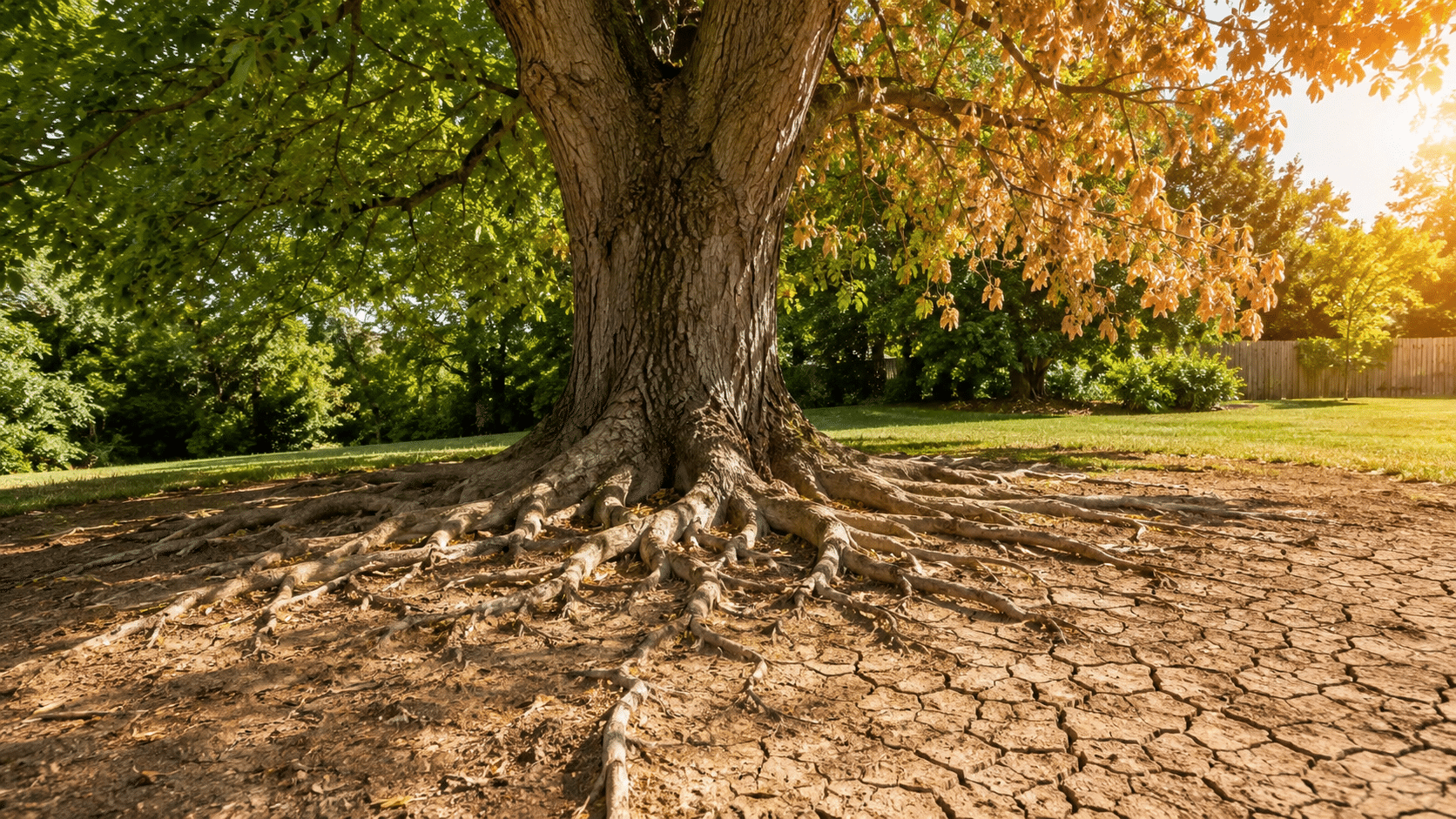
How Tree Roots, Soil, and Heat Affect Tree Health
When homeowners think about tree health, they often look at leaves, branches, and the trunk. While those signs are important, much of a tree’s health starts below the surface. Roots, soil conditions, moisture levels, and heat all play a major role in how well a tree grows and how strong it remains.
In Michigan, summer weather can shift quickly from heavy rain to long stretches of heat. These changes can place stress on trees, especially mature trees, newly planted trees, or trees growing near driveways, sidewalks, roads, and compacted lawns.
Roots Are the Foundation of Tree Health
Tree roots do much more than hold the tree in place. They absorb water, gather nutrients, support stability, and help the tree respond to seasonal changes. When roots are healthy, the entire tree has a better chance of staying strong.
Root problems can affect the canopy, branches, and trunk. A tree with stressed or damaged roots may show signs such as thinning leaves, early leaf drop, browning edges, branch dieback, or reduced growth.
Roots can be affected by construction, lawn equipment, compacted soil, poor drainage, heat, drought, and changes in grade around the tree.
Soil Conditions Matter
Healthy soil gives roots access to oxygen, water, and nutrients. When soil becomes compacted, roots may struggle to breathe and expand. This is common in yards with heavy foot traffic, vehicles parked on lawns, construction work, or repeated equipment use.
Poor soil drainage can also cause problems. Too much water can suffocate roots, while too little moisture can dry them out. Both conditions may weaken a tree over time.
Homeowners should avoid piling soil or mulch directly against the trunk. A thick mound around the base can trap moisture, encourage decay, and create problems near the root flare.
How Summer Heat Stresses Trees
High heat can make it harder for trees to maintain moisture. During hot periods, soil dries faster, leaves lose water, and roots may struggle to keep up. Heat stress can be especially hard on trees that are already dealing with disease, decay, weak limbs, or poor soil conditions.
Signs of heat stress may include:
Wilting leaves
Brown leaf edges
Early leaf drop
Sparse canopy growth
Dead twigs or branches
Cracked or dry soil near the base
If these symptoms appear suddenly or worsen quickly, a professional tree health check can help determine whether the tree needs attention.
Heat and Compacted Soil Can Work Together
Heat problems can become worse when soil is compacted. Compacted soil does not absorb water as easily, and roots may have limited access to oxygen. This can create a stressful environment for the tree during hot, dry weather.
Trees near driveways, sidewalks, patios, and streets often deal with additional heat because pavement and concrete absorb sunlight. This can raise temperatures around the root zone and increase stress.
Protecting Tree Roots During Summer
There are several ways homeowners can support tree health during hot weather. Proper watering, careful mowing, and smart mulching can all help reduce stress.
A mulch ring can help protect roots, retain soil moisture, and keep mowers and trimmers away from the trunk. However, mulch should be spread properly and kept away from direct contact with the bark.
It is also important to avoid cutting roots, compacting soil, or changing the grade around a mature tree without professional guidance.
When to Schedule a Tree Health Check
A tree health check is a smart option when you notice changes in the canopy, leaf color, branch structure, or trunk condition. It can also be helpful after long periods of heat, drought, heavy rain, or nearby construction.
Tree Service of Troy can inspect visible signs of stress, decay, weak limbs, and structural concerns. If trimming, removal, or cleanup is needed, our team can recommend the right next step.
Visit our Tree Health Care and Tree Trimming pages to learn more about maintaining safer, healthier trees.
Keep Your Trees Strong Through the Season
Tree health depends on more than what you see above ground. Roots, soil, moisture, and heat all work together to affect long-term tree strength.
If your trees are showing signs of stress, Tree Service of Troy can help. Schedule a professional tree health check today and protect your trees before small concerns become bigger problems.