


Common Tree Problems Homeowners Miss Until It Is Too Late
Many tree problems begin quietly. A small crack, a thinning section of canopy, or a dead branch may not seem urgent at first. Over time, however, those warning signs can turn into serious safety and property concerns.
For homeowners, the challenge is knowing what to look for before a tree becomes dangerous. Regular tree health checks and professional trimming can help identify issues early, reduce hazards, and protect your home, driveway, walkways, and outdoor spaces.
Dead or Hanging Branches
Dead branches are one of the most common tree problems homeowners overlook. In a full canopy, they can be hard to spot, especially during summer when surrounding leaves hide damaged areas.
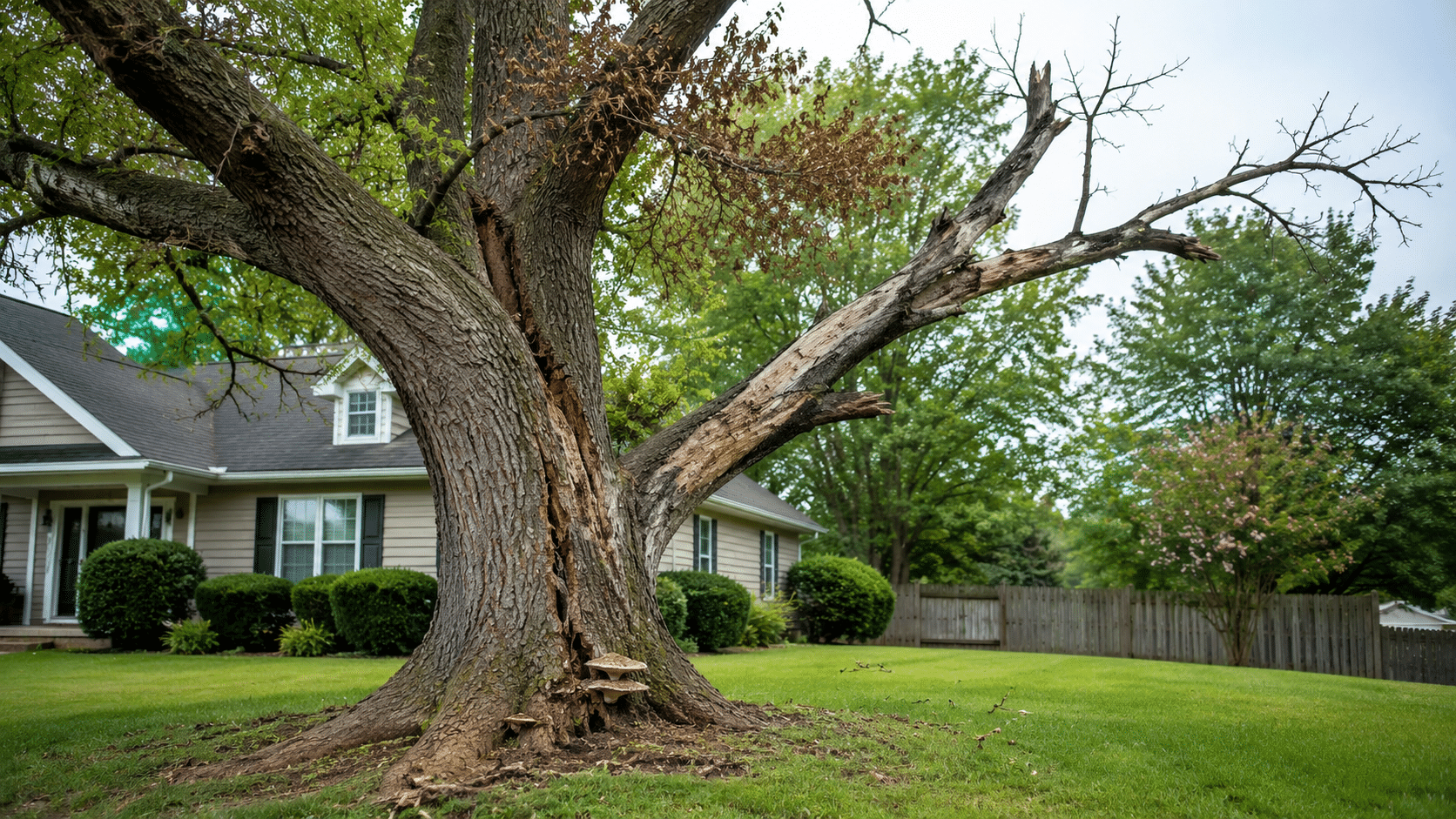
Dead limbs can fall without warning, especially during wind, heavy rain, or snow. They may also indicate deeper stress within the tree.
If you notice branches with no leaves, peeling bark, cracks, or a brittle appearance, it may be time to schedule professional tree trimming.
Cracks in the Trunk or Major Limbs
Cracks can indicate structural weakness. Some cracks are minor, while others may signal that a tree is splitting or under stress. Large cracks in the trunk, branch unions, or main limbs should be taken seriously.
A cracked tree near a home, driveway, fence, or sidewalk may pose a higher risk because failure could cause damage or block access.
Leaning Trees
Not every leaning tree is an emergency, but a lean that appears suddenly or worsens over time should be inspected. Warning signs may include raised soil near the roots, exposed roots, cracking ground, or a trunk that has shifted after a storm.
A leaning tree can become more dangerous during high winds or saturated soil conditions. If the lean is new or severe, avoid standing near the tree and contact a professional.
Hollow Areas and Decay
Hollow spots, cavities, soft wood, and visible decay can weaken a tree from the inside. A tree may still have leaves and appear alive while structural problems develop inside the trunk or major limbs.
Fungus growing near the base or on the trunk can also be a sign of decay. These issues are not always easy to evaluate without experience, which is why tree inspections are important.
Thinning Canopies
A thinning canopy can be a sign of stress, disease, poor root health, or environmental pressure. If one side of the tree looks sparse or if leaves appear smaller than usual, it may be worth taking a closer look.
Thinning canopies are often missed because they develop gradually. Comparing current photos to older photos can help homeowners notice changes.
Branches Too Close to the Roof
Branches that touch or hang over the roof can scrape shingles, clog gutters, rub against siding, and become storm hazards. Even healthy branches can cause problems if they grow too close to your home.
Professional trimming can improve clearance while protecting the tree’s structure.
For more information, visit our Tree Trimming page.
Root Damage
Root problems are often missed because they happen below ground. Soil compaction, construction, excavation, poor drainage, and mower damage near the trunk can all affect root health.
Signs may include dieback, leaning, thinning leaves, or mushrooms near the base.
Old Stumps and Leftover Debris
While stumps may seem harmless, they can create trip hazards, attract pests, interfere with mowing, and make a yard look unfinished. Debris from past storms or tree work can also reduce curb appeal and make outdoor spaces harder to use.
Our Stump Grinding and Debris Haul Away services can help restore a cleaner finish to your property.
Schedule a Professional Tree Health Check
Tree problems are easier to manage when they are found early. Tree Service of Troy can inspect your trees for stress, disease, decay, weak limbs, thinning canopies, and structural concerns.
If you are unsure whether a tree is safe, do not wait until it becomes an emergency. Contact Tree Service of Troy today to schedule a tree health check or learn more about our Tree Removal and Tree Trimming services.