


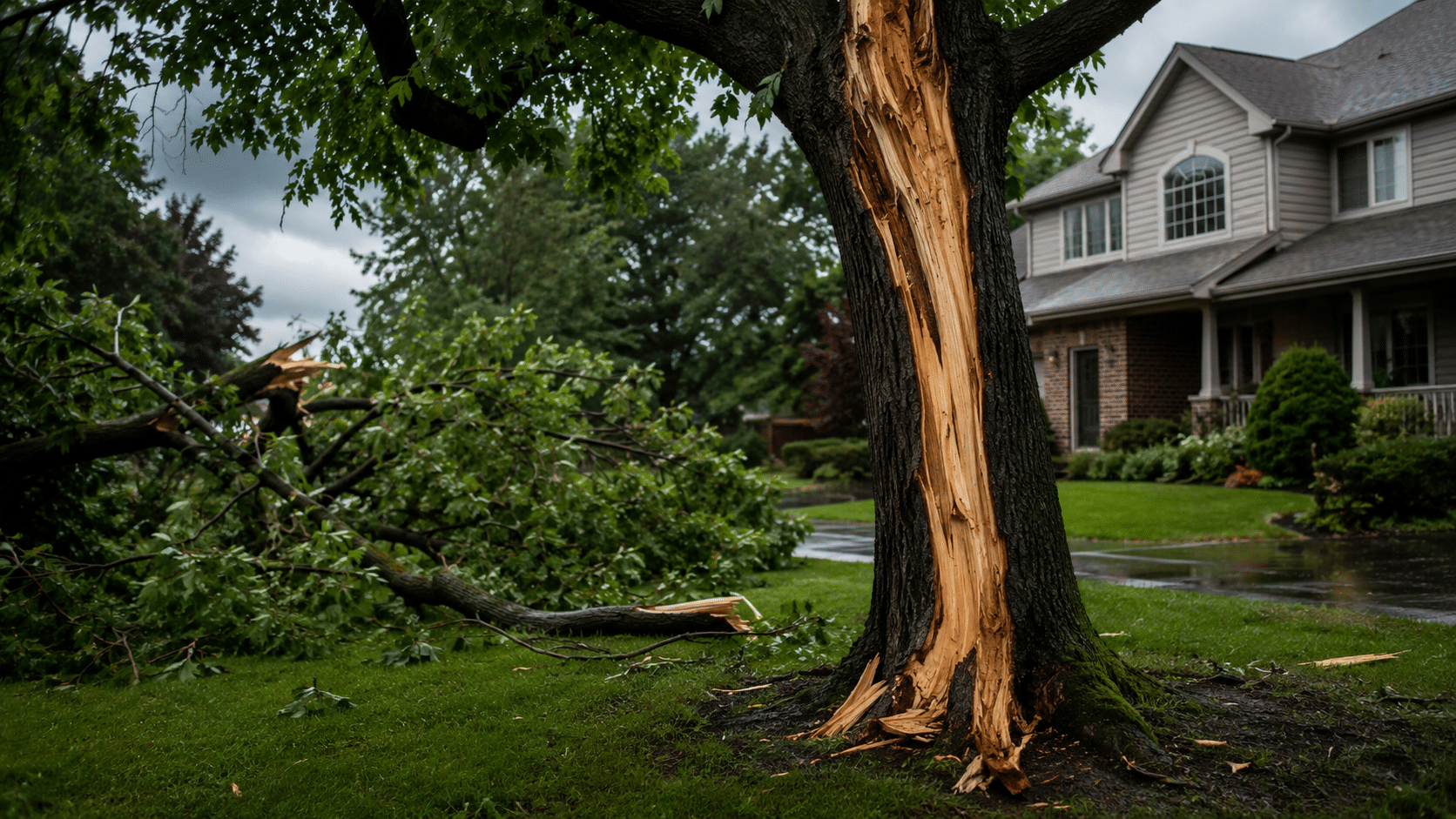
A lightning strike can cause serious damage to a tree. Sometimes the damage is obvious right away. Other times, the tree may look mostly normal at first but decline over time. If you believe a tree on your property was struck by lightning, it is important to stay safe and have the tree professionally inspected.
Lightning-damaged trees can become unstable, drop limbs, split, or develop long-term health problems.
Stay Away From the Tree Immediately After the Storm
After a lightning strike, do not rush toward the tree. Storm conditions may still be dangerous, and damaged branches can fall unexpectedly. If the tree is near power lines, stay far away and contact the utility company.
Never touch damaged branches, hanging limbs, or a tree that appears to be tangled with wires.
Look for Visible Signs of Lightning Damage
A lightning strike may leave signs such as:
A vertical crack down the trunk
Stripped bark
Split wood
Burn marks
Hanging limbs
Shattered branches
Sudden wilting
Scattered bark or wood around the base
Dead sections in the canopy
Sometimes lightning travels through the moisture inside a tree, causing internal damage that is not immediately visible.
Do Not Assume the Tree Is Safe
Even if a lightning-struck tree is still standing, it may be structurally weakened. Cracks, internal splitting, and damaged roots can increase the risk of future failure.
A professional tree health check can help determine whether the tree can be monitored, trimmed, or should be removed for safety.
Visit our Tree Health Care page to learn more about identifying storm-related tree problems.
Some Damage Shows Up Later
Lightning damage may not fully appear for weeks or months. Leaves may brown, branches may die back, or the tree may show signs of decline over time.
This delayed response happens because the tree’s internal systems, roots, or vascular tissue may have been damaged. Continued monitoring is important after the initial inspection.
When Emergency Tree Removal May Be Needed
Emergency removal may be necessary if the tree is split, leaning, near a home, dropping major limbs, or showing signs of instability.
A lightning-damaged tree near a house, driveway, walkway, garage, or fence should be taken seriously. If it fails during another storm, it can create costly damage.
Our Emergency Tree Removal service can help when a damaged tree creates an immediate hazard.
Should You Trim a Lightning-Damaged Tree?
In some cases, trimming damaged limbs may help reduce hazards and allow the tree to recover. In other cases, the damage may be too severe.
Do not attempt to trim large storm-damaged branches yourself. They may be cracked, unstable, or under pressure. A professional crew can remove damaged branches safely.
Take Photos for Documentation
If it is safe, take photos of the tree, visible damage, fallen limbs, and any property damage. These photos may be useful if you need to contact your insurance company.
Avoid moving large limbs or debris until the area has been assessed, unless it is necessary for safety and can be done without risk.
Call Tree Service of Troy After Lightning Damage
A tree struck by lightning should be inspected by a professional. Tree Service of Troy can evaluate visible damage, check for hazards, and recommend trimming, removal, or cleanup if needed.
We provide Tree Health Care, Storm Cleanup, Emergency Tree Removal, and Tree Removal services for homeowners in Troy and surrounding areas.
If your tree was struck by lightning, contact Tree Service of Troy before the damage becomes a bigger safety concern.