


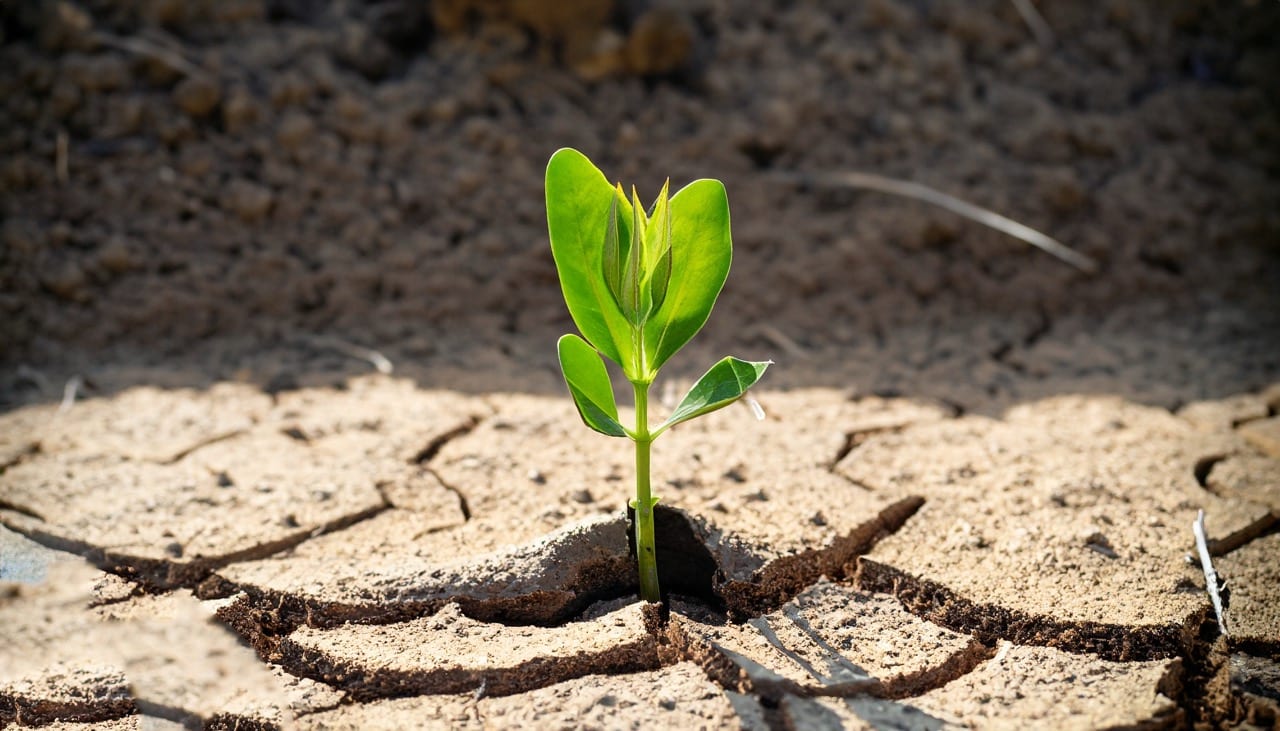
Two trees can experience the same hot, dry Michigan summer and have completely different outcomes.
One may lose leaves early, look rough for several weeks, and return healthy the following spring. Another may continue declining long after rainfall returns.
Why?
A tree’s ability to recover from drought depends on much more than how much rain eventually falls. Species, age, root health, soil conditions, previous stress, and the length of the drought can all influence whether a tree rebounds.
Drought Stress Starts Below Ground
The most important part of a tree during a drought is largely invisible.
Roots need moisture and oxygen to function properly. When soil becomes extremely dry, fine absorbing roots can die. These small roots are responsible for collecting much of the water and nutrients the tree needs.
If drought conditions are brief, the tree may recover once moisture returns.
During prolonged drought, however, significant root loss can occur. Even after rain returns, the remaining root system may not immediately be capable of supporting the entire canopy.
That is why drought damage can continue appearing months after dry weather ends.
Some Tree Species Handle Drought Better
Trees are adapted to different environments.
Some species tolerate periods of dry soil relatively well. Others naturally prefer moist conditions and begin showing stress much sooner.
The location where the tree is planted also matters. A drought-tolerant species growing in compacted soil with limited root space may struggle more than expected.
Selecting the right tree for the right location is one of the best ways to improve long-term resilience.
Established Trees Usually Have an Advantage
A healthy mature tree may have roots extending far beyond the visible canopy, allowing it to access moisture from a much larger area.
Newly planted trees do not have that advantage.
Their roots are still concentrated around the original root ball and surrounding planting area. During hot weather, this smaller root system can dry quickly.
Michigan’s DNR recommends paying particular attention to young trees during hot, dry periods and notes that recently planted trees may need supplemental water when rainfall is insufficient.
Previous Stress Can Determine What Happens Next
Drought often becomes especially damaging when a tree was already struggling.
Previous problems may include:
- Root damage from construction
- Soil compaction
- Excessive pruning
- Storm damage
- Poor planting depth
- Insect infestations
- Tree diseases
- Repeated drought years
Trees store energy that helps them respond to injuries and environmental stress.
A healthy tree may have enough reserves to rebuild damaged roots and produce new foliage. A weakened tree may have fewer resources available for recovery.
Drought Can Make Trees More Vulnerable
Water stress does not always kill a tree directly.
Instead, drought may weaken the tree enough that other problems become more damaging.
Declining trees may become more vulnerable to certain insects, diseases, branch dieback, and additional environmental stress.
This is why homeowners sometimes believe a tree “suddenly died” even though the decline actually began during a drought one or two seasons earlier.
Signs Your Tree Is Recovering
Positive signs include healthy new buds, normal spring leaf development, new twig growth, and a canopy that becomes fuller rather than thinner.
A recovering tree may not look perfect immediately.
Some branches may die back while the rest of the canopy improves. The important question is whether the overall trend is improving or declining.
Signs the Tree May Still Be Struggling
Watch for:
- Increasing numbers of dead branches
- Significant canopy thinning
- Small or undersized leaves
- Early leaf drop
- Bark separating from branches
- Repeated premature fall color
- Fungal growth around the trunk
- Little new growth
- Large areas that fail to leaf out
Multiple symptoms are more concerning than one isolated issue.
Supporting Trees After Dry Weather
Deep, appropriate watering is generally more useful than frequent shallow watering.
Water should reach the root zone rather than simply wetting the surface. Mulch can also help conserve moisture, but it should be spread around the root area rather than piled against the trunk.
Avoid automatically applying fertilizer to a severely stressed tree. More growth is not always what a drought-stressed root system needs.
Have a Declining Tree Professionally Assessed
The effects of drought can continue long after summer ends.
If a tree around your Troy or Metro Detroit property has become noticeably thinner, developed dead branches, or failed to recover after dry weather, Tree Service of Troy can help evaluate the situation.
Call 855-648-7337 to schedule a free estimate and determine whether pruning, continued monitoring, or removal may be appropriate.