


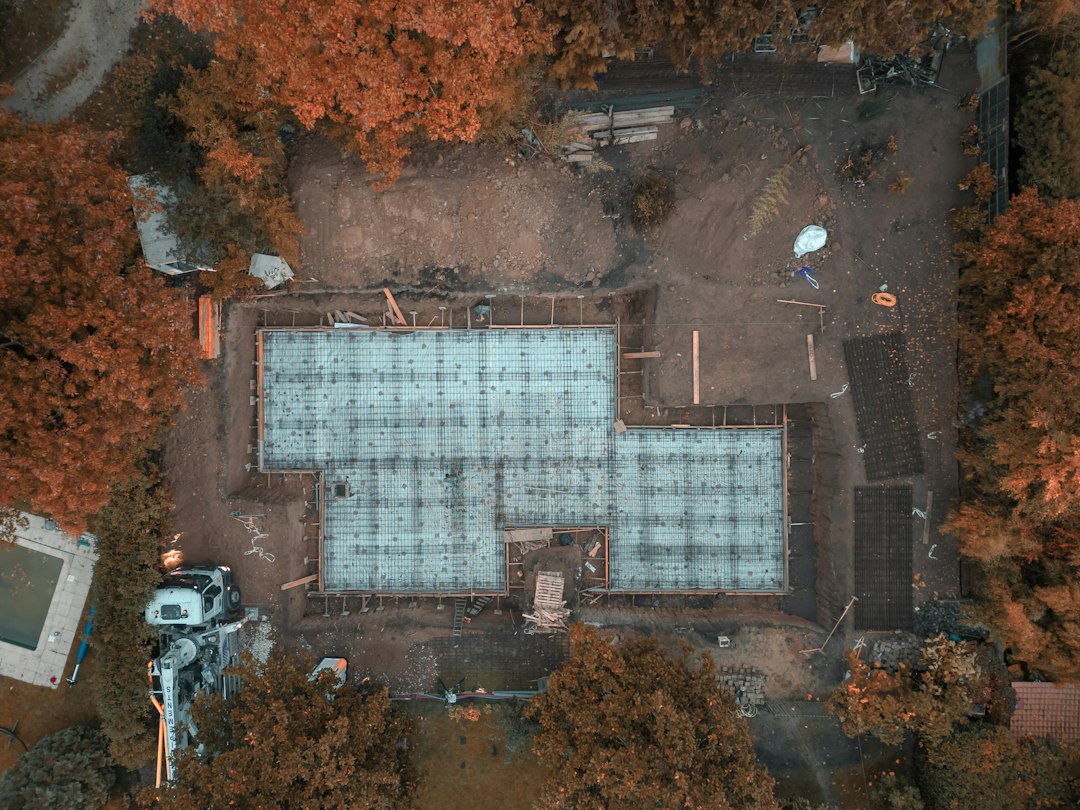
Winter construction can offer scheduling and site-access advantages, but a wooded property needs to be prepared before crews and materials arrive. Trees selected for removal, trees selected for protection, access routes, utilities, debris, and stump work should all be addressed in the correct order.
Clearing too early without a final plan can remove trees that could have stayed. Clearing too late can delay excavation and force multiple contractors to work in the same tight area. Coordination is the difference between an efficient site and an expensive restart.
Work from the latest approved plan
Use the current survey, site plan, grading plan, and contractor layout to mark the building footprint, driveway, utility corridors, and staging areas. Property corners and setbacks should be established by the appropriate professional. Do not use an old fence or a rough visual estimate as the clearing boundary.
Mark trees for removal with one color and trees to preserve with another. Review the markings from the future driveway and building area before cutting begins. A mature tree can be removed later, but it cannot be put back if the layout changes.
Create safe access first
Construction equipment needs a route with adequate width, height, and turning space. Hazardous branches over the entrance should be addressed before trucks begin regular trips. Soft ground, steep grades, overhead utilities, and narrow residential streets may influence the route and equipment selection.
Access clearing should still be limited to what the project needs. An unnecessarily wide corridor removes privacy and increases the amount of disturbed soil.
Protect the roots of retained trees
A construction fence close to the trunk does not protect the full root system. Roots commonly extend well beyond the canopy, with many important absorbing roots near the surface. Parking, material storage, trenching, and soil piles can compact or sever them.
Establish protection zones before excavation and keep them in place through the project. Route utilities away from important trees when the design allows. If work must pass through a root zone, coordinate the method with an arborist and project team rather than improvising in the field.
Remove trees in a workable sequence
Boundary trees, trees leaning into the work area, and large trees near structures may require rigging or crane assistance. Removing them before the site is crowded with forms, equipment, and stored materials can provide a safer, more efficient drop zone.
At the same time, some smaller vegetation can remain temporarily for erosion control. The clearing sequence should support grading and construction without leaving the soil exposed longer than necessary.
Include stumps and debris in the scope
A stump inside a foundation, driveway, or utility route cannot simply remain cut at ground level. Identify where complete removal or grinding is required and how the resulting void will be handled. Stumps outside construction areas may have different requirements.
Decide whether logs will be hauled, chipped, cut for firewood, or left in a designated location. Our lot and land clearing service can combine tree removal and debris handling into a written scope.
Account for winter conditions
Frozen ground may support equipment better in some locations, but snow can conceal stumps, rocks, holes, and boundary markers. Complete essential marking and inspection before accumulation. Weather delays should be considered in the construction schedule.
Tree Service of Troy works with property owners and contractors across Metro Detroit to prepare wooded sites for construction. Call (855) 648-7337 or request a free written quote to coordinate clearing before winter work begins.
Hold a preconstruction site walk
Before the clearing date, bring the property owner, builder, tree contractor, and other key trades together on the lot. Confirm the latest markings, equipment entrance, material staging area, utility routes, and protection zones. Discuss which stumps conflict with excavation and which can remain outside the work area. Photograph marked trees and boundary stakes before snow or machinery obscures them. A short site walk can prevent contradictory instructions, unnecessary removals, and return trips. It also gives every contractor the same understanding of how the wooded character of the property will be preserved where possible.