


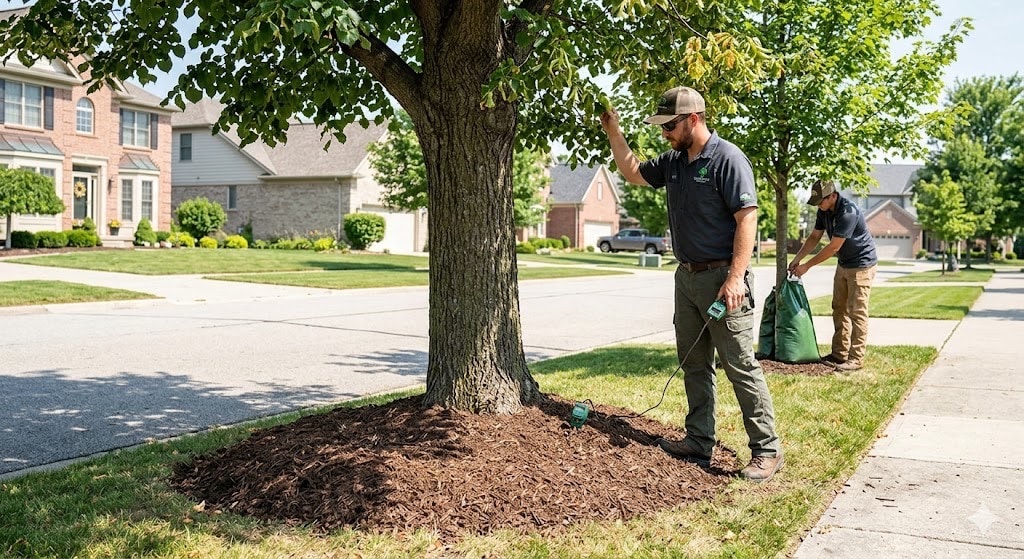
Summer brings longer days, higher temperatures, and increased stress for trees. Established trees may appear strong, but prolonged heat and dry conditions can affect roots, foliage, growth, and overall stability.
Trees growing in compacted soil, near pavement, or in areas with limited access to water may be especially vulnerable. Understanding the signs of heat stress can help homeowners take action before seasonal stress becomes a larger problem.
Heat Increases Water Loss
Trees lose water through their leaves as part of a natural process called transpiration. During hot weather, water loss can increase significantly.
When roots cannot absorb moisture quickly enough, the tree may begin to show signs of stress. These signs can include:
- Wilting or curling leaves
- Browning leaf edges
- Early leaf drop
- Smaller-than-normal leaves
- Slow growth
- Thinning foliage
- Dieback at branch tips
Young trees and recently transplanted trees often require more attention because their root systems are still developing.
Water Trees Slowly and Deeply
Frequent shallow watering may encourage roots to remain near the soil surface. Slow, deep watering helps moisture reach more of the active root zone.
Water should be applied across the soil beneath the canopy rather than directly against the trunk. The goal is to moisten the soil gradually without creating standing water.
Watering needs depend on rainfall, soil type, drainage, tree species, and age. Clay soil holds moisture longer than sandy soil, so it may require less frequent watering.
Early morning is often a practical time to water because temperatures are lower and less moisture is lost to evaporation.
Use Mulch Correctly
A proper layer of mulch can help conserve soil moisture, reduce temperature fluctuations, and limit competition from grass.
Spread mulch around the root zone, but keep it away from direct contact with the trunk. Piling mulch against the bark can trap moisture and encourage decay.
The base of the tree should remain visible, including the trunk flare where the trunk naturally widens near the ground.
Watch for Compacted Soil
Compacted soil can make summer heat more difficult for trees. When soil particles are pressed tightly together, roots may receive less air and water.
Common causes of soil compaction include:
- Parking vehicles beneath trees
- Heavy foot traffic
- Construction equipment
- Storage of landscaping materials
- Repeated mower use near exposed roots
Protecting the root zone can improve the tree’s ability to absorb moisture and remain stable.
Avoid Excessive Pruning During Heat Stress
Removing too much foliage during extreme heat can place additional stress on a tree. Leaves help produce energy and shade branches and bark from direct sunlight.
Dead, broken, or hazardous limbs may still need immediate attention, but major pruning should be planned carefully. Professional tree trimming should focus on specific structural concerns rather than removing large portions of healthy canopy.
Look for Secondary Problems
Heat-stressed trees may become more vulnerable to insects, disease, and branch dieback. Cracks, peeling bark, fungal growth, unusual leaf discoloration, and dead branches should be evaluated.
A stressed tree may also have an underlying issue unrelated to temperature, such as root damage, poor drainage, decay, or previous storm damage.
Support Healthy Trees Throughout Summer
Summer tree care involves more than watering. Root protection, proper mulching, selective pruning, and early identification of problems all contribute to healthier growth.
Tree Service of Troy provides tree health assessments, trimming, removal, stump grinding, and storm damage cleanup throughout Troy and surrounding areas. If your trees are showing signs of heat stress, schedule a professional evaluation before the condition worsens.