


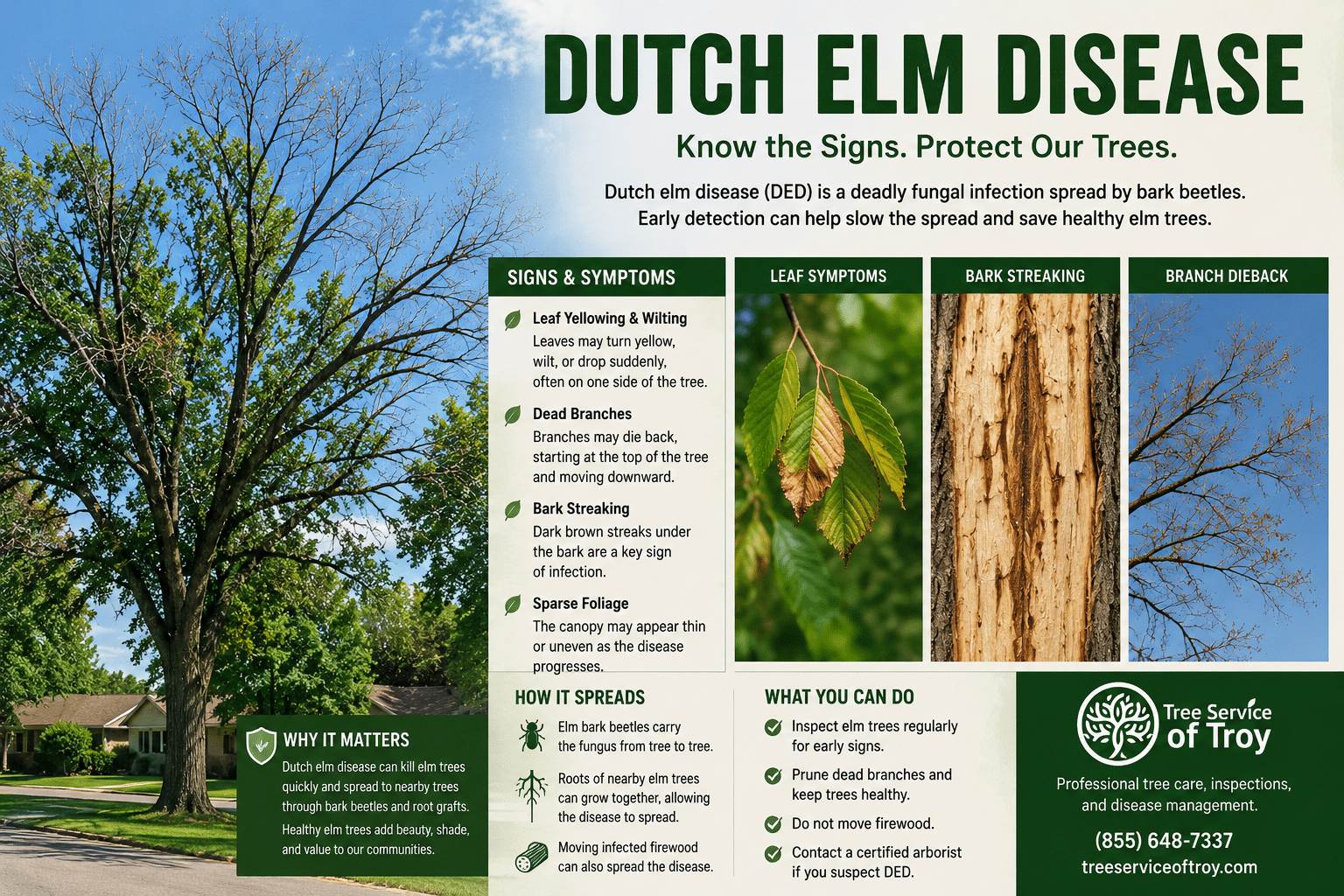
How To Identify Dutch Elm Disease: Signs & Symptoms
Dutch elm disease is one of the most destructive tree diseases in North America. It has killed millions of elm trees over the years and continues to threaten landscapes today. Early detection is critical because the disease can spread quickly and severely weaken affected trees.
Knowing the warning signs may help homeowners act before the disease progresses further.
What Is Dutch Elm Disease?
Dutch elm disease is a fungal infection spread primarily by bark beetles. Once inside the tree, the fungus blocks water movement through the vascular system, causing branches and eventually the entire tree to decline.
American elm trees are especially vulnerable.
Early Signs of Dutch Elm Disease
One of the first signs is wilting or yellowing leaves that appear during the growing season.
Other common symptoms include:
- Leaves curling or turning brown
- Sudden leaf drop
- Dead branches in the upper canopy
- Sparse foliage
- Branch dieback
Symptoms often begin in one section of the tree before spreading further.
Look for Streaking Under the Bark
Dark brown streaks beneath the bark are another common indicator. These streaks appear in infected branches where the fungus has disrupted water movement.
Professional inspection may be necessary to confirm the disease properly.
How the Disease Spreads
Dutch elm disease commonly spreads through:
- Elm bark beetles
- Root grafts between nearby trees
- Infected firewood
- Improper pruning practices
Because the disease spreads rapidly, early action is important.
Why Fast Removal Matters
Infected trees may become unstable over time. Removing diseased trees can help reduce the risk of spreading the fungus to nearby healthy elms.
Professional removal may also be necessary if:
- Large branches begin dying
- The tree becomes hazardous
- Structural stability declines
Prevention Tips
While no prevention method is perfect, homeowners can reduce risks by:
- Scheduling regular tree inspections
- Pruning deadwood
- Avoiding improper cuts during beetle season
- Monitoring nearby elm trees carefully
Healthy trees are generally more resilient against stress and disease.
Protect Your Trees With Professional Care
If you suspect Dutch elm disease or notice unusual changes in your trees, professional evaluation is important. Early diagnosis may help slow the spread and improve safety around your property.
Tree Service of Troy offers inspections, trimming, removals, and tree care services to help homeowners manage tree health concerns throughout the year.
Visit treeserviceoftroy.com to learn more.