


Trees naturally change as they grow, but some changes can point to structural weakness, decay, or declining health. Cracks, cavities, dead branches, and unusual leaning should not automatically be treated as emergencies, but they should not be ignored either.
Spotting warning signs early gives homeowners more time to arrange professional care before severe weather or continued deterioration creates a larger safety concern.
Look for Deep or Widening Trunk Cracks
Small surface marks in bark are common. Deep cracks that extend into the wood are more concerning, particularly when they appear near a major branch union or where two trunks connect.
Watch for cracks that seem to widen, expose inner wood, collect water, or run vertically along a large section of the trunk. A split between two heavy stems can place significant pressure on the tree during wind, rain, or snow.
Avoid filling cracks, wrapping the trunk, or attaching homemade supports. These methods can hide the problem without correcting the structural weakness.
Inspect Cavities and Hollow Sections
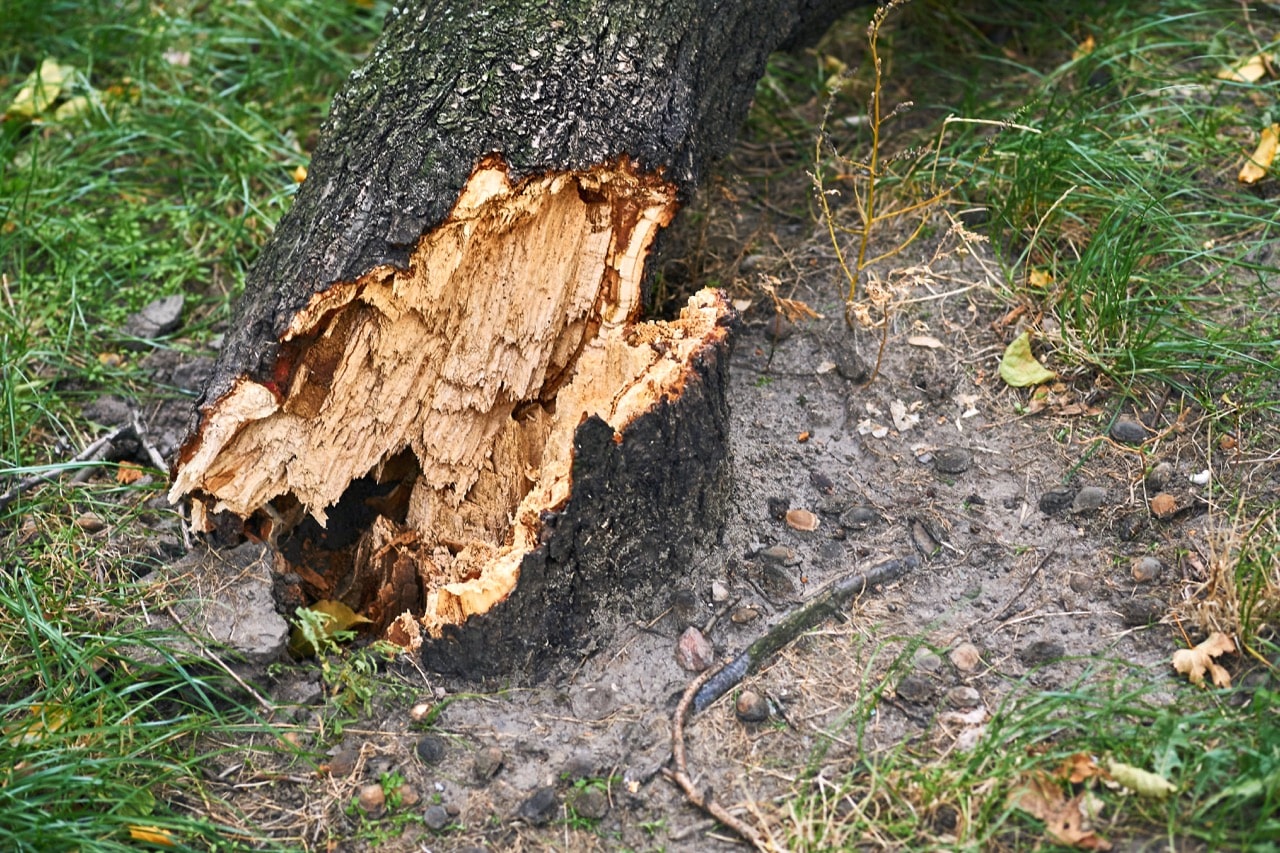
A cavity may form after a branch breaks, bark is damaged, or decay enters through an old wound. Some trees continue growing around cavities, but the remaining wood must still be strong enough to support the canopy.
Signs that a cavity needs attention include soft or crumbling wood, water collecting inside, insects entering the opening, or cracks extending outward from the damaged area.
The position of the cavity matters. Damage near the base, at a major branch connection, or on a leaning tree may create greater concern than a small cavity in a minor limb.
Watch for Broken or Hanging Branches
Storms and high winds can leave branches partially attached. Hanging limbs may remain caught in the canopy, making them difficult to see from the ground.
Look upward from a safe location and watch for broken branches, torn bark, fresh exposed wood, or limbs resting on lower branches. Never stand beneath a damaged canopy or attempt to pull down a suspended limb.
Professional tree trimming and pruning can remove hazardous branches using the right equipment and controlled techniques.
Pay Attention to Leaning
Some trees grow naturally at an angle. A new or increasing lean is more concerning, especially when combined with cracked soil, raised roots, trunk damage, or recent storm activity.
If the root plate appears to be lifting or the soil is separating near the base, the tree may have lost stability. Keep the surrounding area clear and arrange an inspection quickly.
Check for Dead or Missing Bark
Healthy bark protects the tree from moisture loss, insects, and infection. Large areas of loose, cracked, or missing bark can expose the wood beneath.
You may also notice sunken sections, dark stains, holes, sawdust-like material, or unusual insect activity. These signs may indicate decay, disease, or pest damage.
Notice Changes in the Canopy
A tree’s canopy can reveal problems occurring lower in the trunk or roots. Warning signs may include sparse leaves, dead branch tips, early leaf drop, or sections that fail to produce new growth.
One dead branch may be manageable through pruning. Multiple dead limbs across the canopy may point to a broader health or structural concern.
Look at the Roots and Surrounding Soil
Visible roots should appear firmly anchored. Damaged, decaying, or severed roots can reduce stability and affect the tree’s ability to absorb water.
Construction, trenching, driveway work, and soil compaction can all harm roots. Changes may not appear in the canopy until months or years later.
Know When to Call a Professional
Tree warning signs are not always easy to interpret from the ground. The size of the defect, its location, the tree species, and nearby targets all influence the level of risk.
When a tree has extensive damage, severe decay, or major structural instability, professional tree removal may be the safest option.
Do not wait until a branch falls or a trunk splits. Contact Tree Service of Troy to have cracks, cavities, leaning, or other concerns professionally evaluated.