


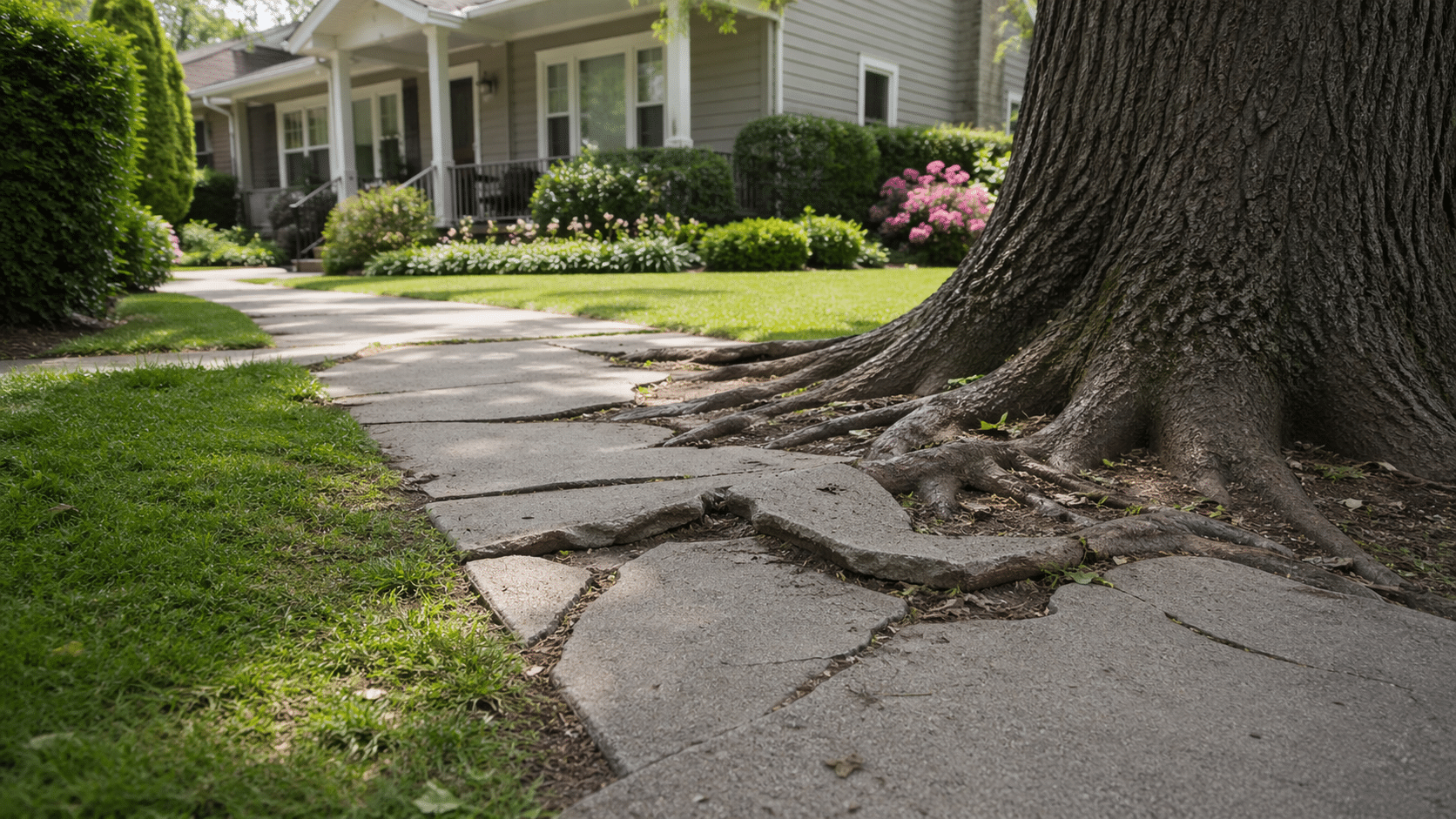
Tree roots are a natural and essential part of a healthy tree, but they can sometimes create problems for nearby hard surfaces and structures. Many homeowners are surprised to learn that the issue is not always that roots are strong enough to break solid concrete on their own. More often, roots take advantage of weak points, shallow construction, existing cracks, or shifting soil, then gradually make the problem worse over time.
If you have trees growing close to your home, driveway, or sidewalk, it is important to understand how root growth can affect your property and when professional tree care may help prevent more costly damage.
Why Tree Roots Spread So Far
Tree roots do not stay packed tightly under the trunk. In many cases, they spread well beyond the canopy in search of water, oxygen, and nutrients. Most roots grow in the upper layers of soil, where those resources are easiest to access. Because of that shallow growth pattern, roots can move toward sidewalks, patios, driveways, and foundation areas if conditions are favorable.
Moisture also plays a role. Roots often grow toward areas where water is more available, including irrigation zones, drainage areas, and soil near a home’s foundation.
How Tree Roots Affect Sidewalks
Sidewalk damage is one of the most common issues homeowners notice. As roots expand beneath or alongside a sidewalk, they can lift sections of concrete, create uneven surfaces, and form trip hazards. This does not usually happen overnight. It is often a slow process that becomes more obvious as roots thicken over time.
Signs of possible root-related sidewalk problems include:
- Raised or uneven concrete panels
- Cracks that continue getting wider
- Concrete shifting near mature trees
- Surface roots visible near the walk
If left unaddressed, these conditions can create both safety concerns and curb appeal issues.
How Tree Roots Affect Driveways
Driveways can experience similar problems, especially if the tree is planted too close or if the root flare area is already pushing toward the paved surface. Cracking, lifting, and uneven settling may all occur as roots develop under weak points or edges.
Driveway damage may be more noticeable when:
- A large tree is planted close to the driveway
- The driveway already has small cracks
- Soil movement is occurring beneath the surface
- Water runoff is encouraging root growth toward the pavement
In some cases, trimming or root zone management may help. In others, the tree may need closer evaluation if the damage is becoming more severe.
Can Tree Roots Damage Foundations?
Foundation concerns are one of the biggest worries homeowners have. While roots do not usually smash through a solid, properly built foundation, they can contribute to problems in certain situations. If there are already cracks, poor drainage, shifting soil, or moisture fluctuations near the home, tree roots can add pressure or worsen instability around the structure.
Roots may also influence the soil around a foundation by absorbing moisture, which can sometimes contribute to soil movement in certain conditions. That is why trees planted too close to a house deserve careful attention as they mature.
Warning Signs to Watch For
You may want a professional tree evaluation if you notice:
- Surface roots near sidewalks or driveways
- Cracking or lifting concrete near a mature tree
- Trees planted very close to the home
- Leaning pavement or shifting surfaces
- Concerns about roots near the foundation line
A professional assessment can help determine whether the tree is the likely cause, how aggressive the root growth appears to be, and what options may help reduce future problems.
What Homeowners Should Do Next
It is important not to cut major roots on your own. Improper root cutting can weaken the tree, increase stress, and even create a safety hazard if the tree becomes unstable. The best next step is to have the tree and surrounding area evaluated before making decisions.
Depending on the situation, solutions may include monitoring, pruning, removal, or planning for future landscape changes. For related services, explore our Tree Inspections and Assessments page, Tree Trimming and Pruning page, or Tree Removal page. If you are already seeing damage around your property, visit our Contact Us page to schedule an evaluation.
Protect Your Property Early
Tree roots can quietly create issues for sidewalks, driveways, and foundations over time. Catching those concerns early can help protect both your property and the long-term health of the tree. If you are noticing signs of root-related damage, Tree Service of Troy can help you evaluate the situation and recommend the right next step.