


Removing a mature tree is not a decision most homeowners want to make.
Trees provide shade, privacy, beauty, wildlife habitat, and character to a property. When a tree develops serious structural or health problems, however, keeping it may eventually create an unacceptable risk.
The challenge is knowing when a tree can still be managed and when removal becomes the more practical option.
The Tree Is Dead or Mostly Dead
A completely dead tree will not recover.
As dead wood dries and deteriorates, branches can become increasingly brittle. Eventually, sections may fail during wind, storms, snow, or even calm weather.
Dead trees located near homes, driveways, sidewalks, roads, patios, or neighboring properties deserve particular attention.
A tree with a few dead branches is different from a completely dead tree. Selective pruning may be enough when the remaining structure is healthy.
Large Branches Are Dying
Canopy dieback can sometimes indicate broader decline.
If several major limbs are dead, the tree may have experienced serious root damage, disease, drought stress, or internal decline.
Large dead limbs also create a direct overhead hazard.
A professional assessment can help determine whether removing individual branches is sufficient or whether the tree has lost too much of its healthy canopy.
There Is Significant Trunk Decay
Cavities and decay do not automatically mean a tree needs to come down.
Trees can remain standing for years with internal decay because they naturally compartmentalize damaged tissues.
The important question is how much sound wood remains and where the defect is located.
A large cavity near the base of a tree may have different structural implications than a small hollow higher in the trunk.
Fungal fruiting bodies, extensive cavities, cracks, and damaged trunk sections are all good reasons to have the tree evaluated.
The Tree Has Developed a Serious Lean
Not every leaning tree is dangerous.
Some trees grow at an angle naturally and develop root systems capable of supporting that position.
A new or suddenly increasing lean is more concerning.
Watch for raised soil, cracking soil, exposed roots, or movement around the root plate. These can indicate that anchoring roots have been compromised.
If a large tree suddenly changes position, keep people away from the potential fall zone and contact a tree professional.
Storm Damage Has Compromised the Structure
Michigan storms can split trunks, break major branches, and damage root systems.
Some damaged trees can be repaired through pruning and continued monitoring.
Others lose too much of their structure to remain reasonably safe.
The location of the damage matters. A tree with a broken limb over an open portion of a yard presents a different situation than a damaged tree leaning toward a home.
The Tree Has Outgrown Its Location
Sometimes a tree is healthy but no longer compatible with the property.
It may have been planted too close to a house, utility line, driveway, retaining wall, or another mature tree.
Repeated aggressive pruning can sometimes create additional problems rather than solving the underlying space conflict.
Removal and replacement with a better-suited tree may make more sense in certain situations.
Disease May Affect the Decision
Some diseases can be managed while others eventually lead to serious decline.
The tree species, disease involved, severity of infection, tree value, and location all influence whether treatment or removal is appropriate.
Do not remove a tree solely because you notice unusual leaves. Many tree conditions have similar symptoms and need proper identification.
Professional Tree Removal Can Be Highly Controlled
Large trees close to structures are not simply cut down from the bottom.
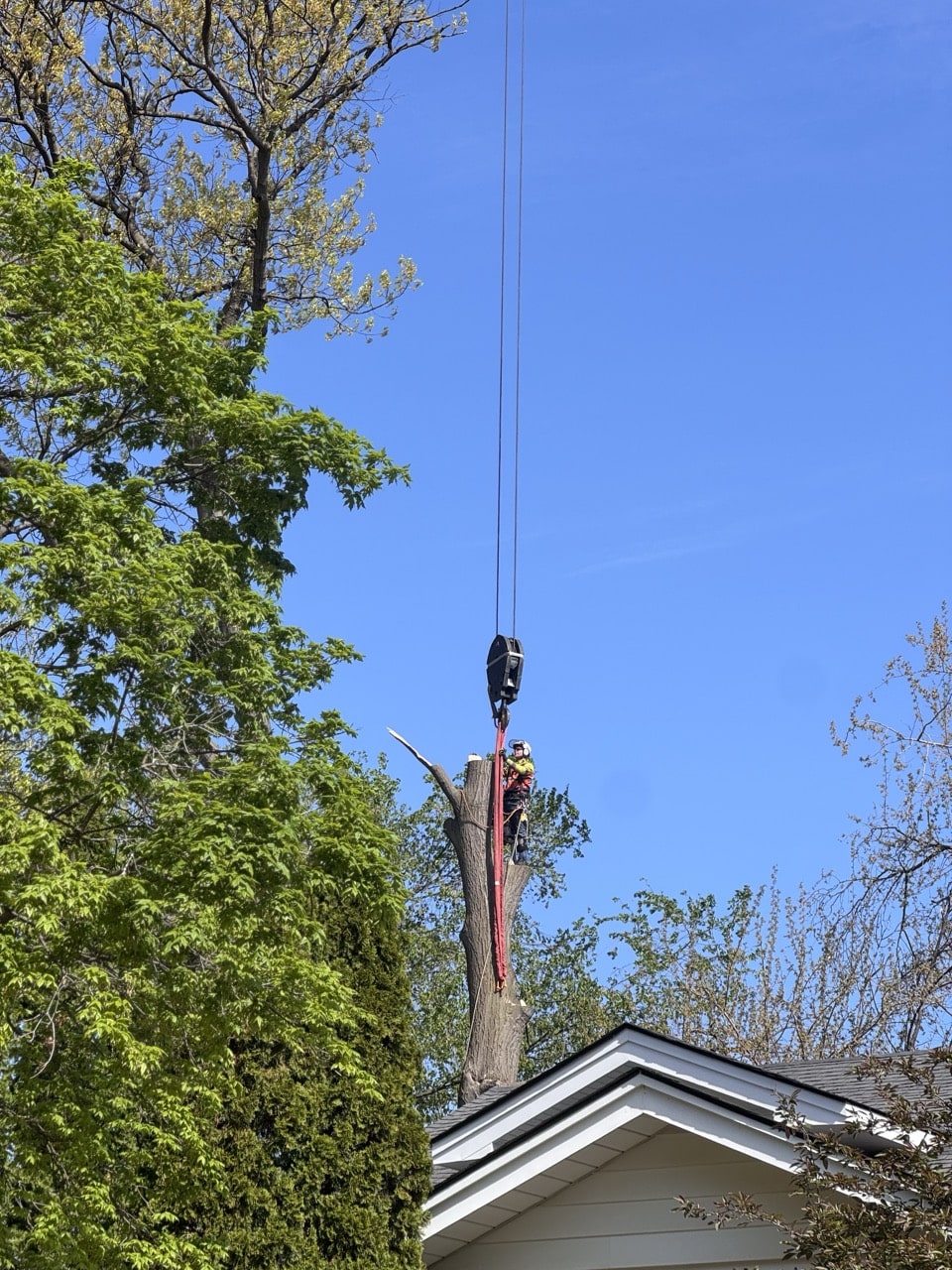
Professional crews may dismantle trees in carefully planned sections using ropes, rigging, aerial equipment, or cranes.
Controlled removal allows large branches and trunk sections to be lowered or lifted away from homes, landscaping, fences, and other obstacles.
Tree Service of Troy provides tree removal and crane services for complex projects throughout Southeast Michigan.
When in Doubt, Have the Tree Assessed
The decision to remove a tree should be based on the whole picture.
Consider its health, structure, location, targets beneath it, and whether reasonable corrective work can reduce the concern.
Tree Service of Troy can inspect visible defects and help you understand whether trimming, monitoring, or removal may be appropriate.
Call 855-648-7337 for a free estimate and professional tree assessment.