


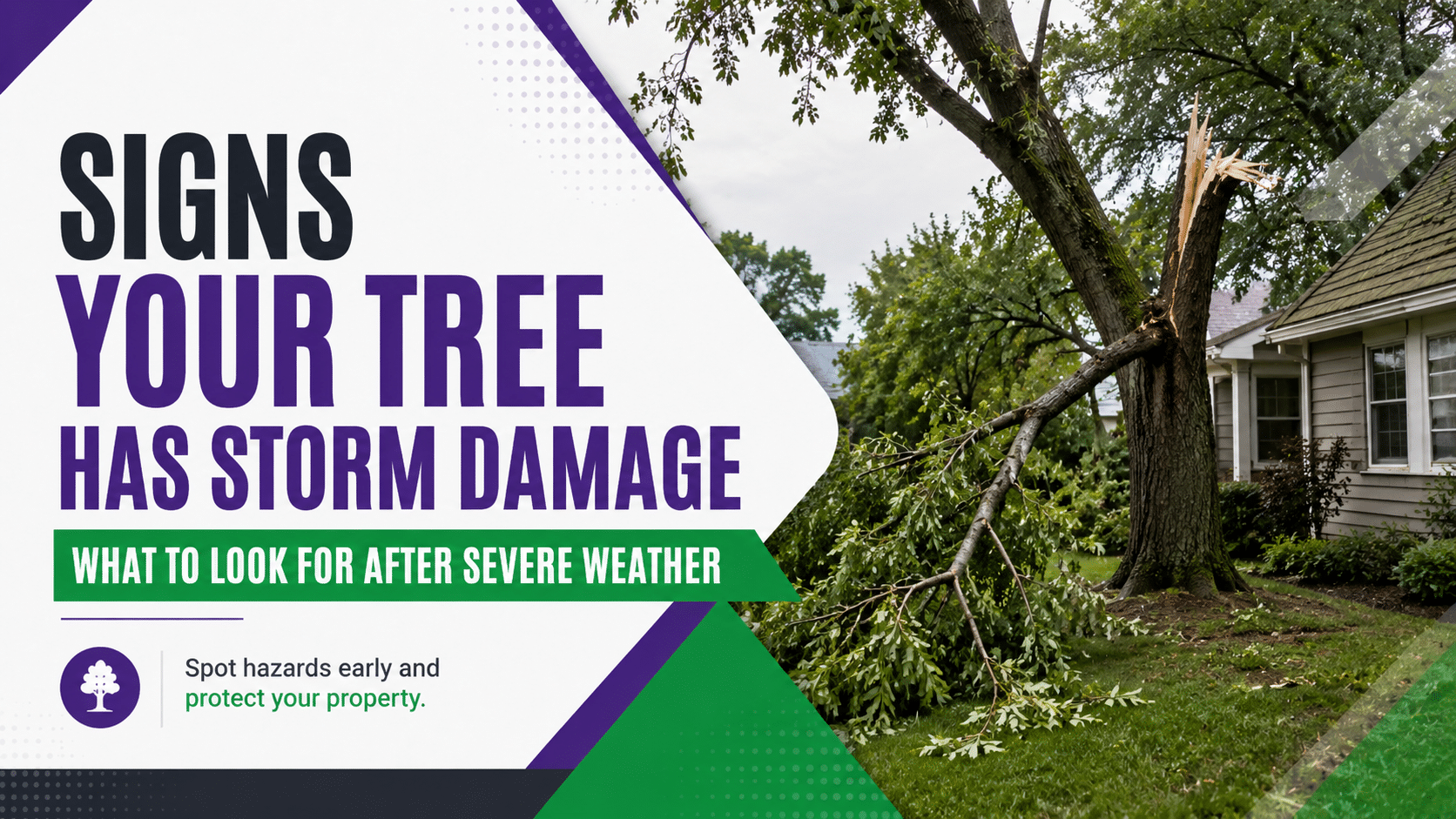
After a strong storm, it is easy to notice large fallen branches or a tree that has come down completely. However, not all storm damage is obvious. Some damage can remain hidden until the next round of wind or rain causes the tree to fail. Knowing what to look for can help homeowners protect their property and respond before a dangerous situation gets worse.
Broken Or Hanging Branches
One of the most common signs of storm damage is broken or hanging limbs. These branches may be caught in the canopy, resting on other branches, or dangling over a roof, driveway, sidewalk, or yard.
Hanging limbs are dangerous because they can fall without warning. Even smaller branches can cause injury or property damage if they drop from a height. If you see broken limbs after a storm, avoid standing underneath them and call a professional tree service.
Cracks In The Trunk Or Major Limbs
Cracks and splits in the trunk or large branches can be serious warning signs. A storm can place extreme pressure on a tree, especially during high winds. If the trunk is cracked, the tree may have lost structural strength.
Large limb cracks can also make branches unstable. These issues should be inspected quickly to determine whether trimming or removal is needed.
A Tree That Is Suddenly Leaning
If a tree begins leaning after a storm, it may indicate root damage or soil movement. Saturated ground can weaken root support, while strong winds can shift the tree’s position.
A sudden lean is especially concerning if the tree is leaning toward a home, garage, driveway, fence, or power line. Do not wait to see if it gets worse. A professional inspection can help determine whether the tree is stable.
Exposed Or Lifted Roots
Storms can affect more than branches and trunks. Heavy rain and wind can shift soil and expose roots. If the ground near the tree looks lifted, cracked, or disturbed, the root system may have been compromised.
Roots are what anchor the tree. When they are damaged or weakened, the entire tree can become unstable.
Missing Bark Or Fresh Wounds
Fresh bark damage, torn limbs, and open wounds can all be signs of storm impact. While some wounds may heal over time, others can create entry points for decay, disease, or insects.
A tree with large wounds should be evaluated to determine whether it can recover or whether it poses a long-term risk.
Canopy Damage Or Uneven Shape
After a storm, look at the overall shape of the tree. If one side of the canopy is suddenly missing branches, heavily damaged, or uneven, the tree may be structurally imbalanced. This can put extra stress on the remaining limbs and increase the chance of future breakage.
Professional trimming may help restore balance and remove weak branches.
Do Not Ignore Hidden Storm Damage
Storm-damaged trees can become more dangerous over time. What looks like a minor issue today may become a major hazard during the next storm. Acting early can help protect your home, vehicles, landscape, and family.
For storm damage cleanup and hazardous tree service, visit:
https://www.treeserviceoftroy.com/services/storm-damage-troy-mi/
For tree removal services, visit:
https://www.treeserviceoftroy.com/services/tree-removal-troy-mi/
Call Tree Service of Troy
If your trees show signs of storm damage, contact Tree Service of Troy for a professional evaluation. From broken limbs to leaning trees, fast action can help reduce risk and restore safety to your property.