


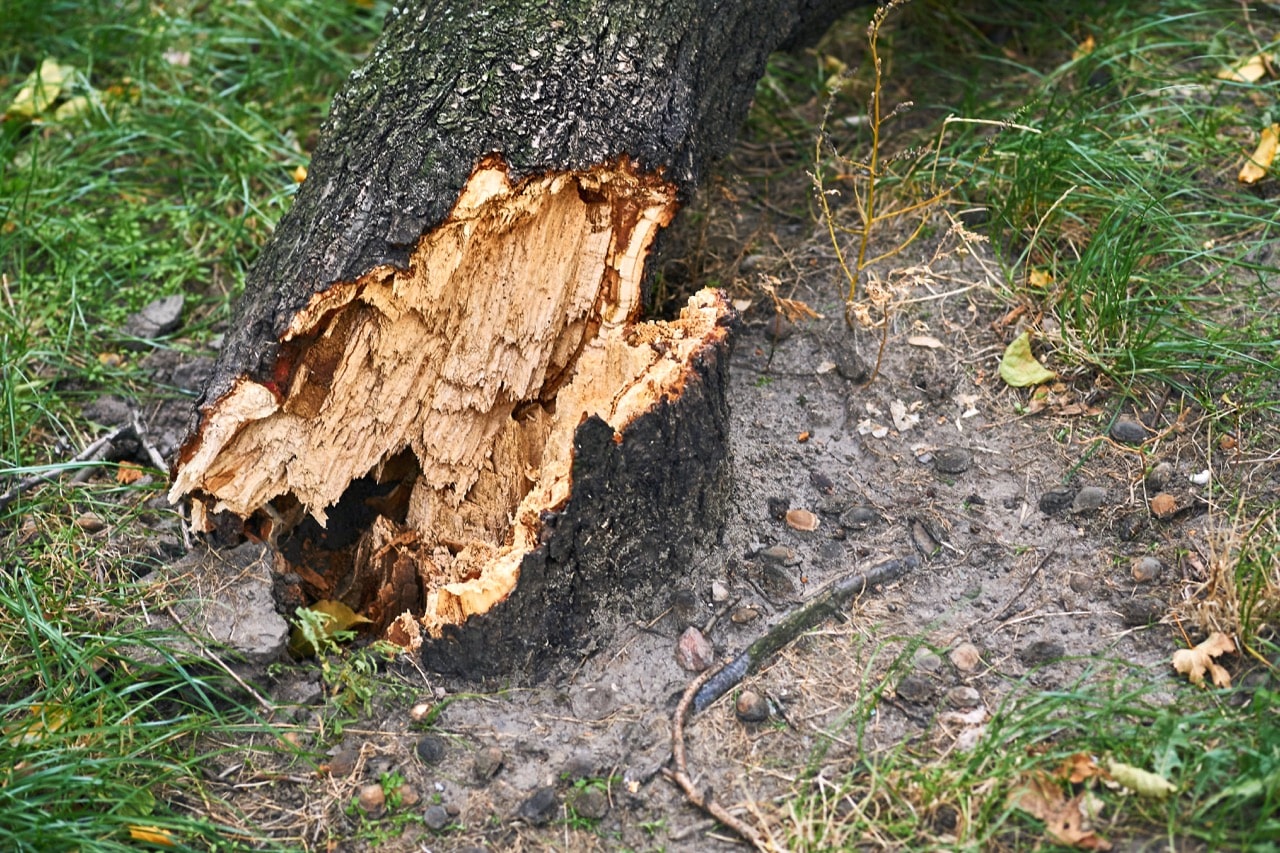
Strong winds, thunderstorms, heavy rain, ice, and snow can damage trees with little warning. After a storm, homeowners often need to make quick decisions about fallen limbs, leaning trees, blocked driveways, roof damage, and potentially hazardous trees.
This storm damage FAQ explains what to look for after severe weather and when to contact a professional tree service. If you are dealing with an immediate tree hazard, visit our Storm Damage service page or contact Tree Service of Troy for an assessment.
What should I do first after a storm damages a tree?
Start by keeping people and pets away from the damaged area. Do not walk underneath hanging branches, partially split limbs, or trees that are leaning more than they were before the storm.
If a tree or branch is touching a utility line, stay back and contact the utility company. Never attempt to move a branch that is in contact with a power line.
How can I tell if a storm-damaged tree is dangerous?
Some damage is obvious, but other problems can be difficult to see from the ground. Warning signs include a newly leaning trunk, large cracks, exposed roots, split branch unions, hanging limbs, broken tops, or major branches that have separated from the trunk.
A tree may also become unstable if saturated soil causes the root plate to shift. When in doubt, avoid the area until the tree can be evaluated.
Can a storm-damaged tree be saved?
Sometimes. A tree with limited branch damage may recover with professional pruning and ongoing monitoring. The decision depends on the tree species, size, location, amount of canopy lost, trunk condition, root stability, and whether major structural limbs have failed.
If the damage is concentrated in smaller limbs, professional tree trimming and pruning may be enough. If the trunk, root system, or primary structure has failed, removal may be the safer option.
When does a storm-damaged tree need to be removed?
Removal may be recommended when the tree has uprooted, split through the trunk, lost major structural sections, developed a severe lean, or cannot remain safely standing near a home, driveway, road, fence, or other occupied area.
Large or hazardous removals may require specialized rigging or crane equipment. Learn more about our tree removal services.
Should I remove broken branches myself?
Small debris on the ground may be manageable for some homeowners, but cutting storm-damaged trees can be unpredictable. Branches may be under tension, partially supported, or connected to larger damaged sections that can shift suddenly.
Avoid climbing damaged trees or using a chainsaw on suspended limbs. Large, elevated, or unstable branches should be handled by trained professionals with appropriate equipment.
What if a tree falls on my house, garage, fence, or vehicle?
First make sure everyone is safe. If the tree has damaged the structure, electrical service, gas lines, or other utilities, contact the appropriate emergency or utility provider before approaching the area.
Take photos from a safe distance before cleanup begins. Those photos may be useful when documenting the damage for your insurance company.
Does homeowners insurance cover storm-damaged tree removal?
Coverage varies by policy and by what the tree damaged. In many cases, insurance treatment is different when a fallen tree damages an insured structure compared with a tree that simply falls in the yard.
Contact your insurance carrier directly for guidance on your specific policy. Ask what documentation they need before removal and whether they require photos, estimates, or other records.
What happens to the branches and debris after storm cleanup?
Storm cleanup can include removing fallen limbs, logs, and other tree debris from the work area. If your property has a significant amount of material after a storm, our brush, log, and debris cleanup service may also be helpful.
Can a tree look fine after a storm but still be damaged?
Yes. Cracks, weakened branch attachments, root movement, and internal damage are not always obvious immediately after severe weather. A tree that appears normal from one side may have damage higher in the canopy or on the opposite side of the trunk.
If a large tree is close to your home or shows any new structural changes after a storm, a professional inspection can help identify problems before the next high-wind event.
How quickly should I call a tree service after storm damage?
Call as soon as possible when a tree is blocking access, leaning toward a structure, resting on a building or vehicle, hanging over a frequently used area, or showing major structural failure. Less urgent damage should still be evaluated before another storm adds additional stress.
Who should I call for storm-damaged trees in Troy, Michigan?
Tree Service of Troy provides professional storm damage cleanup, hazardous tree removal, trimming, and related tree services for homeowners in Troy and surrounding Metro Detroit communities.
If you are concerned about a damaged, fallen, or unstable tree, contact Tree Service of Troy today to request an assessment and estimate.