


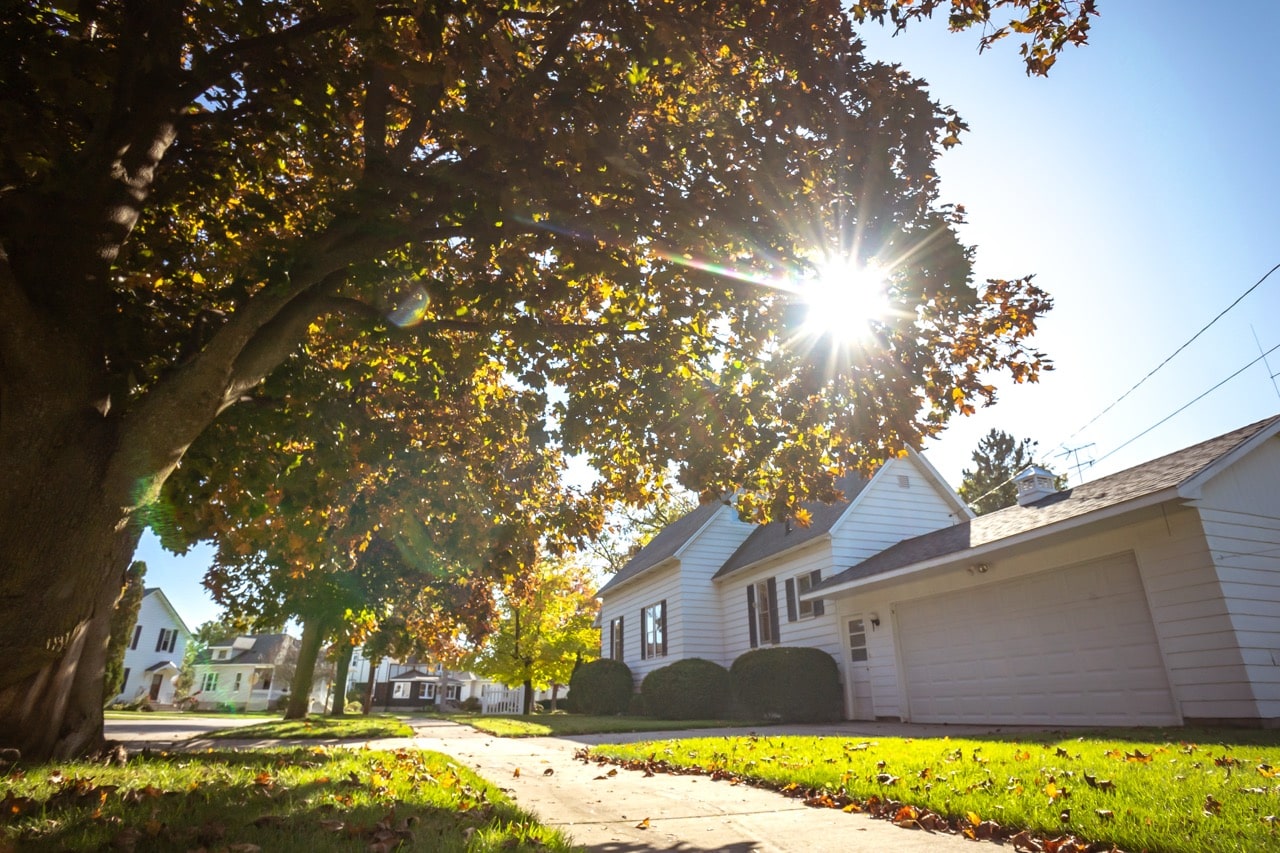
A small tree at the garden center can be difficult to picture at its mature size.
What begins as a manageable six-foot tree can eventually develop a wide canopy, substantial trunk, and extensive root system.
Planting too close to your home can create years of unnecessary pruning, conflicts with structures, and difficult decisions later.
When choosing a location, think about the tree that will exist decades from now rather than the tree being planted today.
Mature Canopies Need Room
Large trees naturally spread outward as they grow.
When there is not enough space between a tree and a house, branches may eventually reach the roof, siding, windows, chimney, or gutters.
Branches touching a roof can scrape roofing materials during windy conditions. Falling limbs can also damage gutters, vehicles, landscaping, fences, and other property.
Constantly cutting branches back from a building may also interfere with the tree’s natural structure.
Choosing enough space from the beginning is much easier than repeatedly correcting the problem later.
Roots Need Space Too
Tree roots typically extend well beyond the trunk and often beyond the visible canopy.
Roots are essential for anchoring the tree and collecting water and nutrients.
Problems can occur when growing space is severely restricted by foundations, driveways, patios, sidewalks, retaining walls, or compacted soil.
Tree roots do not typically break through a healthy, intact foundation simply because a tree is nearby. However, roots can contribute to conflicts with pavement, exploit existing cracks or leaking underground infrastructure, and become restricted by built structures.
The larger concern is often whether the site provides enough healthy soil for the mature tree.
Trees Can Become Difficult to Maintain
A tree positioned directly beside a home can make routine maintenance more complicated.
Branches may grow over steep roofs or between structures. Tree removal may eventually require specialized rigging, cranes, or controlled lowering techniques because there is no safe open drop zone.
Access can also become difficult for equipment.
Planning ahead can reduce these problems.
Shade Is Helpful, but Placement Matters
Strategically located shade trees can make outdoor areas more comfortable and reduce direct summer sunlight around a home.
But closer is not always better.
The goal is to position the tree where the mature canopy can provide benefits without creating constant conflicts.
Michigan’s DNR encourages homeowners to consider a tree’s mature size, site conditions, and available growing space before planting.
Watch for Utility Conflicts
Before planting, look up as well as down.
A tree planted beneath overhead utility lines may eventually require repeated clearance pruning.
Large-growing trees should generally be placed where they have room to reach their mature height without interfering with overhead infrastructure.
Before digging, homeowners should also have underground utilities located.
Consider the Tree’s Mature Width
Plant labels often include mature height but width is equally important.
Ask:
How wide will the canopy become?
How close is the driveway?
Could branches eventually reach the roof?
Is there enough soil around the planting location?
Are underground utilities nearby?
Will the tree block visibility when mature?
Are several trees competing for the same space?
Thinking about these questions now can prevent problems years later.
What If You Already Have a Large Tree Close to the House?
Do not assume it needs to be removed simply because of its location.
Many mature trees grow near homes for decades without creating an unacceptable risk.
Instead, evaluate the actual condition of the tree.
A healthy, structurally sound tree may only require periodic pruning and monitoring.
More significant action may be needed when there are large dead branches, severe structural defects, major root problems, extensive decay, storm damage, or insufficient clearance.
Plan for the Future of Your Property
Trees are long-term landscape investments.
Selecting an appropriate species and giving it enough growing space can provide decades of shade, beauty, wildlife value, and curb appeal.
Poor placement can create the opposite result.
If you have mature trees growing close to your home and are concerned about overhanging branches or structural safety, Tree Service of Troy can help.
Call 855-648-7337 to request a free estimate for professional tree trimming, assessment, or removal.