


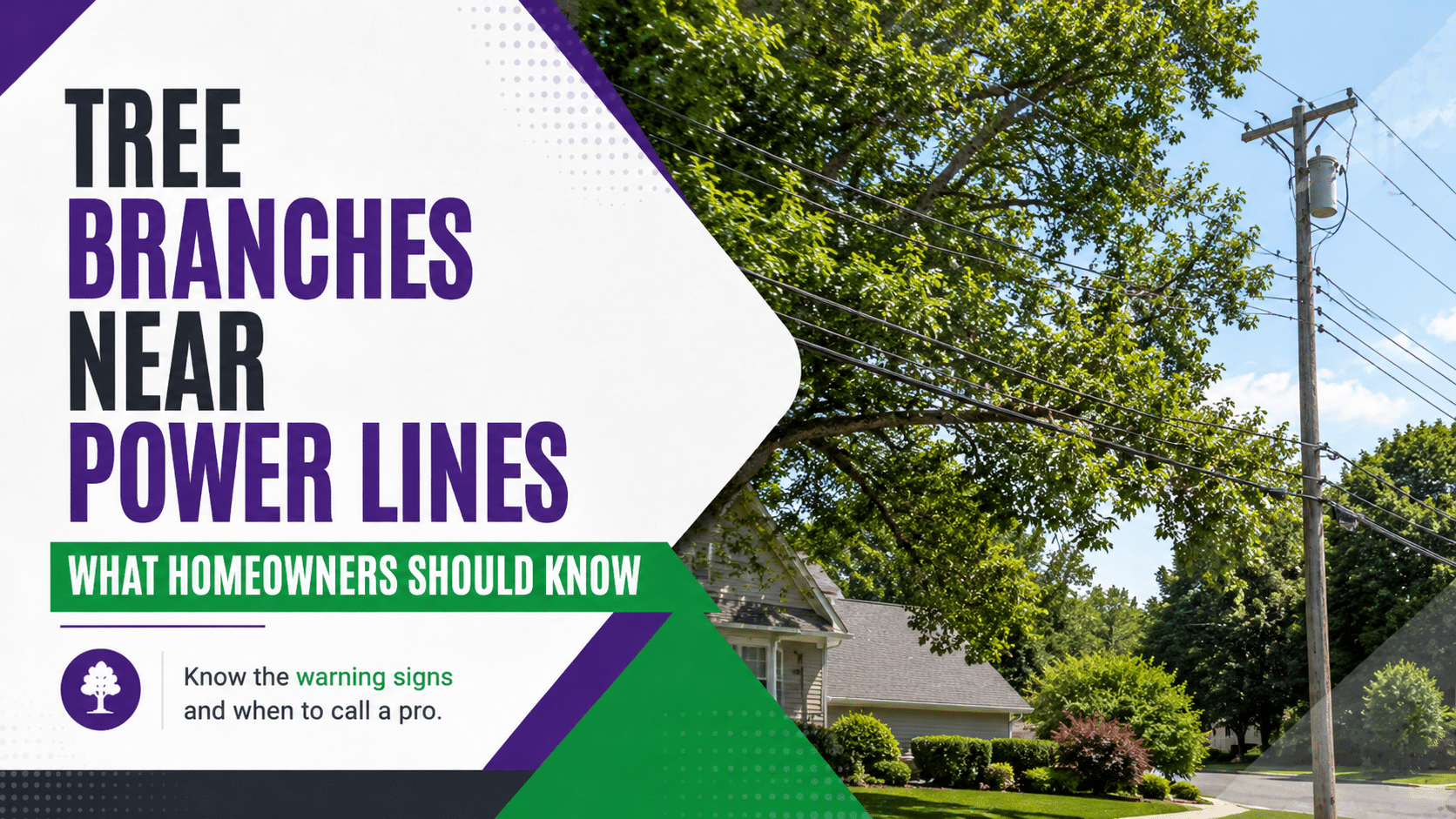
Tree branches near power lines should always be taken seriously. While overgrown limbs may look like a simple trimming issue, trees and electrical lines can create dangerous situations. Homeowners should understand the risks, know what warning signs to watch for, and avoid attempting this type of work themselves.
Why Branches Near Power Lines Are A Serious Concern
Branches growing into or near power lines can create safety hazards, especially during storms. High winds, heavy rain, snow, or ice can cause limbs to snap, sag, or fall onto electrical lines. This can lead to power outages, damaged property, and dangerous conditions around the yard.
Even branches that are not touching lines can become a problem if they are close enough to move during severe weather. A limb may sway into a line or break unexpectedly.
Never Trim Around Power Lines Yourself
Tree trimming near power lines is not a do-it-yourself job. Homeowners should never use ladders, pole saws, chainsaws, or trimming tools near electrical lines. The risk of electric shock, falls, and serious injury is too high.
Even if a branch appears dry or the line looks insulated, it should still be treated as dangerous. Electrical hazards are not always obvious from the ground. The safest choice is to call the utility company or a qualified tree service professional, depending on the situation.
Warning Signs To Watch For
Homeowners should inspect their property from a safe distance and look for branches that are close to power lines, tangled in lines, hanging over service wires, or cracked after storms. If a tree appears to be leaning toward lines or has broken limbs suspended above them, stay away from the area.
Other warning signs include flickering power, damaged branches after high winds, limbs resting on wires, or trees growing directly under utility lines.
Storms Increase The Risk
During severe weather, branches near power lines become even more dangerous. Wind can push limbs into lines, while heavy rain can weaken soil and tree stability. Ice can add extra weight to branches, making them more likely to break.
After a storm, do not approach downed wires or branches touching wires. Keep children and pets away from the area and report the issue immediately.
Preventative Tree Trimming Helps Reduce Problems
Routine tree trimming can help reduce the chance of branches interfering with structures, roofs, driveways, and certain overhead areas. While utility-related trimming must be handled properly, professional tree care can help manage overgrowth before it becomes a bigger issue.
Trimming can improve tree shape, reduce weak limbs, and help prevent storm-related branch failure. It is especially important for trees near homes, garages, and other high-value areas.
Learn more about professional trimming here:
https://www.treeserviceoftroy.com/services/tree-trimming-troy-mi/
When To Call A Professional
If branches are near power lines, hanging after a storm, or growing too close to your home, it is best to get professional advice. A tree service can evaluate the tree, identify hazards, and explain the safest path forward.
For storm-related branch cleanup and tree hazards, visit:
https://www.treeserviceoftroy.com/services/storm-damage-troy-mi/
Call Tree Service of Troy
Tree branches near power lines should never be ignored or handled casually. If you are concerned about tree growth, storm damage, or unsafe limbs on your property, contact Tree Service of Troy for professional guidance and tree care support.