


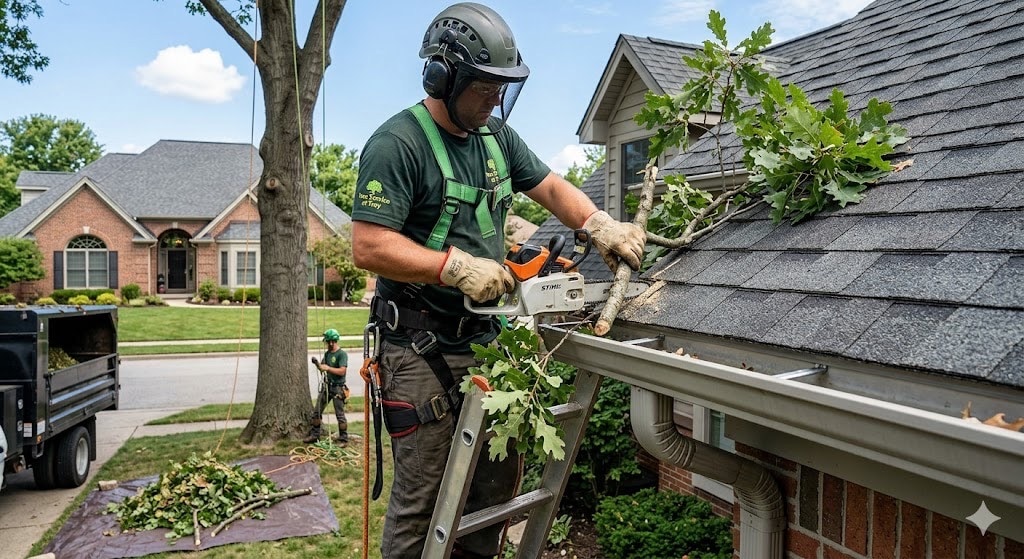
Tree branches growing near a roof may provide shade and visual appeal, but they can also create maintenance and safety concerns. Over time, branches may scrape shingles, clog gutters, trap moisture, or break during storms.
Homeowners should monitor roof clearance and address overgrown branches before they cause damage. Professional trimming can help create space while preserving the tree’s health and natural structure.
Look for Direct Contact With the Roof
Branches touching the roof can move back and forth during wind. Repeated contact may wear down shingles, loosen roofing materials, or damage gutters.
Even smaller twigs can cause problems if they continually scrape the same area. Larger branches may place pressure on the roof or become hazardous when covered with leaves, ice, or snow.
Walk around your property and look for branches that:
- Touch shingles or gutters
- Hang directly over the roof
- Rest on utility lines
- Block windows or vents
- Rub against siding
- Extend over chimneys
- Appear dead or cracked
A ground-level inspection can identify visible concerns, but a professional may be needed to evaluate branches higher in the canopy.
Keep Gutters Clear
Overhanging branches can drop leaves, seeds, twigs, and other debris into gutters. Clogged gutters may prevent rainwater from draining properly.
Water can overflow near the foundation, collect along the roof edge, or contribute to moisture problems. Trimming selected branches can reduce the amount of debris falling directly onto the roof.
Tree trimming does not eliminate the need for gutter maintenance, but it can make routine cleanup easier.
Watch for Dead or Weak Limbs
Dead branches are more likely to break during wind and storms. Limbs with cracks, decay, peeling bark, or missing foliage may need professional attention.
A branch does not have to be extremely large to damage roofing, gutters, windows, or outdoor equipment. Falling branches can also create risks for vehicles and people near the home.
Do Not Attempt Risky DIY Trimming
Tree trimming near a roof can be dangerous. Ladders may become unstable, branches can fall unpredictably, and cutting a large limb incorrectly may damage the tree or home.
Branches near electrical lines create an even greater hazard. Contact the utility before arranging work near power lines.
Professional crews use appropriate equipment and controlled cutting methods to lower branches safely.
Create Appropriate Clearance
There is no single clearance distance that works for every tree and home. The proper approach depends on the branch size, tree species, roof design, growth pattern, and surrounding structures.
The goal is to create enough space to reduce contact while avoiding unnecessary removal of healthy branches.
Excessive pruning can weaken the tree, reduce shade, and lead to fast-growing shoots. Selective trimming usually provides a better long-term result.
Consider the Entire Tree
Branches near the roof may be one part of a larger structural concern. A tree may also have a heavy lean, damaged roots, a split trunk, or multiple weak branch unions.
A professional inspection can determine whether trimming is sufficient or whether the tree presents a larger property risk.
If the tree is severely damaged, unstable, or too close to the structure, removal may be recommended.
Protect Your Roof With Proactive Tree Care
Waiting until a branch breaks can lead to unnecessary repairs and emergency cleanup. Regular inspections and professional trimming can help maintain safer clearance around your roof, siding, gutters, and windows.
Tree Service of Troy provides professional tree trimming, tree removal, storm cleanup, and property protection services throughout Troy and nearby communities. Schedule an assessment if branches are growing too close to your home.