


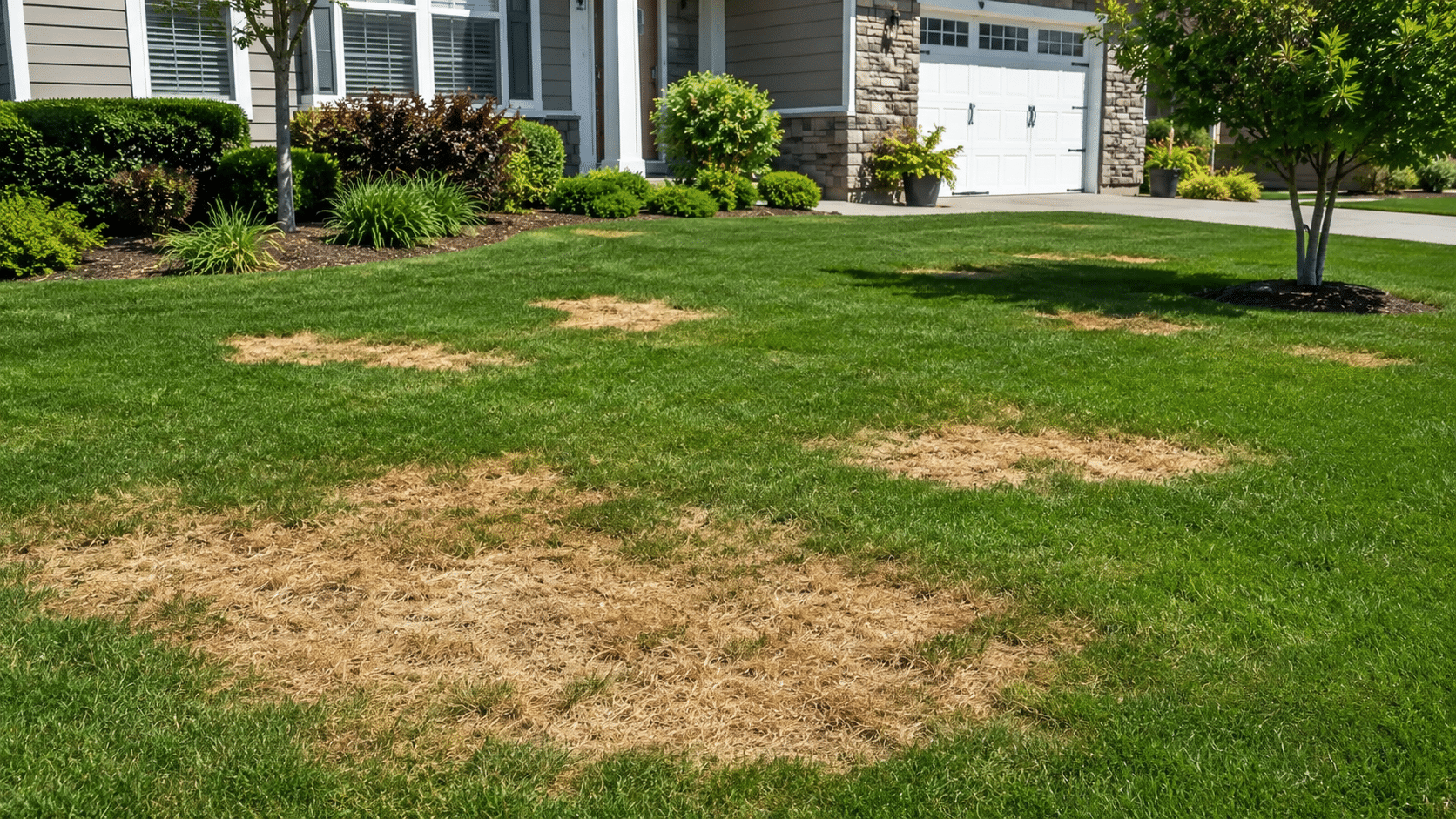
Brown spots on a lawn can be frustrating for homeowners. One area of the yard may look dry, thin, patchy, or dead while the rest of the lawn looks healthy. There are many possible causes, including heat, watering issues, soil conditions, foot traffic, pet damage, pests, disease, and shade.
Trees can also play a role in lawn health. Shade, roots, fallen debris, and moisture competition can all affect how grass grows around your property.
Heat and Dry Weather
Hot summer weather can dry out lawns quickly, especially during extended dry periods. Grass may turn brown when it does not receive enough moisture or when soil becomes compacted and hard.
Areas near driveways, sidewalks, and roads may dry faster because pavement absorbs heat. Lawns under trees may also compete with roots for available moisture.
Too Much Shade
Grass needs sunlight to grow well. If large tree canopies block too much light, the lawn beneath them may become thin or patchy. Shade can also keep soil cooler and damp in some areas, creating uneven growing conditions.
Professional Tree Trimming can sometimes help improve sunlight and airflow without removing the tree entirely. Strategic trimming may make shaded areas easier to maintain.
Tree Roots Competing With Grass
Large tree roots absorb water and nutrients from the soil. In some yards, grass growing near the trunk or under the canopy may struggle because roots are competing for the same resources.
Exposed roots can also make mowing difficult and may create uneven lawn areas. Avoid cutting major roots, as this can harm the tree. If root issues are affecting the yard, a professional tree health check can help determine the safest approach.
Overwatering or Poor Drainage
Brown spots are not always caused by dryness. Too much water can also damage grass and tree roots. Poor drainage may leave areas soggy, weaken the lawn, and contribute to root stress.
If the same area stays wet long after watering or rain, the issue may involve soil compaction or drainage problems.
Fallen Leaves, Branches, and Debris
Yard debris can block sunlight, trap moisture, and affect the lawn underneath. Fallen branches and piles of leaves may leave brown patches if they sit too long.
After storms, cleanup is especially important. Our Storm Cleanup and Debris Haul Away services can help remove branches and debris so the yard can recover.
Old Stumps Can Get in the Way
Old stumps may not directly cause brown spots everywhere, but they can make mowing harder and leave nearby areas uneven or unfinished. Decaying stumps may also attract pests or interfere with landscaping plans.
Stump Grinding can help remove the obstacle and create a cleaner, easier-to-maintain yard.
Lawn Disease and Pests
Some brown spots are caused by lawn disease or insect activity. These issues may appear as circular patches, thinning areas, or irregular patterns. If watering and mowing changes do not help, a lawn care professional may need to evaluate the grass.
Tree Service of Troy does not diagnose lawn disease, but we can help address tree-related conditions that may affect the lawn environment.
When Trees Affect Lawn Health
Trees may contribute to lawn problems when:
Branches block too much sunlight
Roots compete for moisture
Debris sits on grass too long
Stumps interrupt mowing
Storm damage leaves branches behind
Overgrowth limits airflow
Tree trimming, stump grinding, and yard cleanup can help improve the overall condition and appearance of your outdoor space.
Create a Cleaner, Healthier Yard
Brown spots can have many causes, but tree care may be part of the solution when shade, roots, branches, or debris affect the lawn. Tree Service of Troy can help with trimming, tree removal, stump grinding, storm cleanup, and debris haul away.
If your yard feels crowded, shaded, or difficult to maintain, contact Tree Service of Troy to schedule professional tree care.