


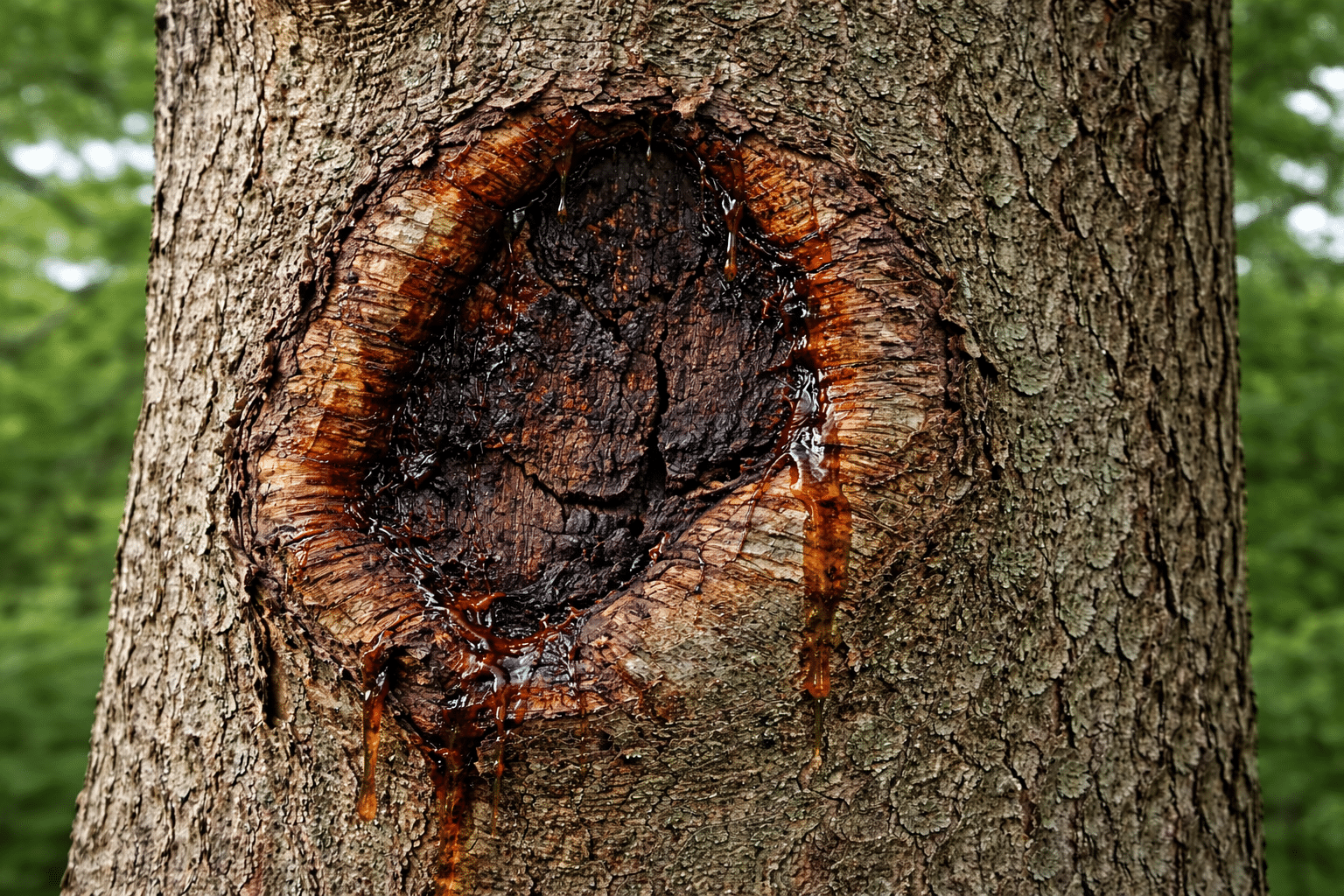
Tree cankers are one of those tree health problems many homeowners do not notice until the damage has already started to spread. At first glance, a canker may look like a small sunken area, cracked bark, or a discolored patch on a branch or trunk. But what seems minor on the surface can become a serious issue if left untreated.
Understanding what tree cankers are and why they matter can help homeowners act sooner and protect both their landscape and their property.
What Is a Tree Canker?
A tree canker is a localized area of dead tissue on a branch, limb, or trunk. Cankers usually develop when bark is damaged and disease-causing organisms, such as fungi or bacteria, enter the tree. Once inside, they begin to kill the living tissue beneath the bark.
In many cases, a canker appears as:
- Sunken or swollen bark
- Cracked or peeling bark
- Discolored areas on the trunk or branches
- Oozing sap or moisture
- Dead twigs or branches above the damaged area
Because bark acts as a protective layer, any break in that surface can create an opening for infection. That is why storm damage, pruning wounds, lawn equipment injuries, and environmental stress can all increase the risk.
Why Tree Cankers Matter
A canker is not just a cosmetic problem. It affects the structure and health of the tree. As the damaged area expands, it can interrupt the flow of water and nutrients through the tree. That means the branches above the canker may weaken, decline, or die back.
In some cases, a canker can girdle a branch or trunk section. When that happens, the tree may lose the ability to support growth above the infected area. This can lead to:
- Branch failure
- Canopy thinning
- Structural weakness
- Higher storm damage risk
- Progressive decline over time
For homeowners, that makes cankers important not only from a plant health standpoint, but also from a safety standpoint.
What Causes Tree Cankers?
Tree cankers are often connected to stress. Trees that are already weakened by drought, poor drainage, root issues, insect activity, or improper pruning are usually more vulnerable to infection.
Common causes include:
- Fungal infections
- Bacterial infections
- Bark wounds
- Sunscald
- Frost cracks
- Mechanical damage from mowers or trimmers
- Long-term environmental stress
A tree may look healthy overall while still developing a canker in one area. That is why routine observation and professional evaluation matter.
When to Take Action
Not every canker means the entire tree must be removed, but every canker deserves attention. The earlier the issue is identified, the better the chance of limiting additional stress and managing the damage.
Homeowners should schedule a professional evaluation if they notice:
- A growing dead patch on the trunk or limbs
- Bark splitting or falling away
- Dead branches forming in one section of the canopy
- Repeated branch decline in the same area
- A canker near a major scaffold limb or the main trunk
If structural weakness is involved, it may also be a good time to internally link to your Tree Inspections and Assessments page, Tree Trimming and Pruning page, or Tree Removal page.
Why Professional Evaluation Matters
Tree cankers are not all the same. Some remain isolated, while others spread and compromise the stability of the tree. A professional can evaluate the location, size, severity, and effect on the tree’s structure to help determine the next step.
In some cases, pruning out an infected branch may help. In others, reducing stress on the tree through improved care may be part of the solution. If the canker is on the trunk or affecting major limbs, removal may be the safer choice.
Protect Tree Health Early
Tree cankers matter because they can weaken a tree from the inside out. What starts as a damaged patch of bark can eventually affect structure, safety, and long-term health. Early attention gives homeowners more options and can help prevent more serious problems later.
For related internal links, connect this post to your Tree Trimming and Pruning, Tree Removal, and Contact Us pages.