


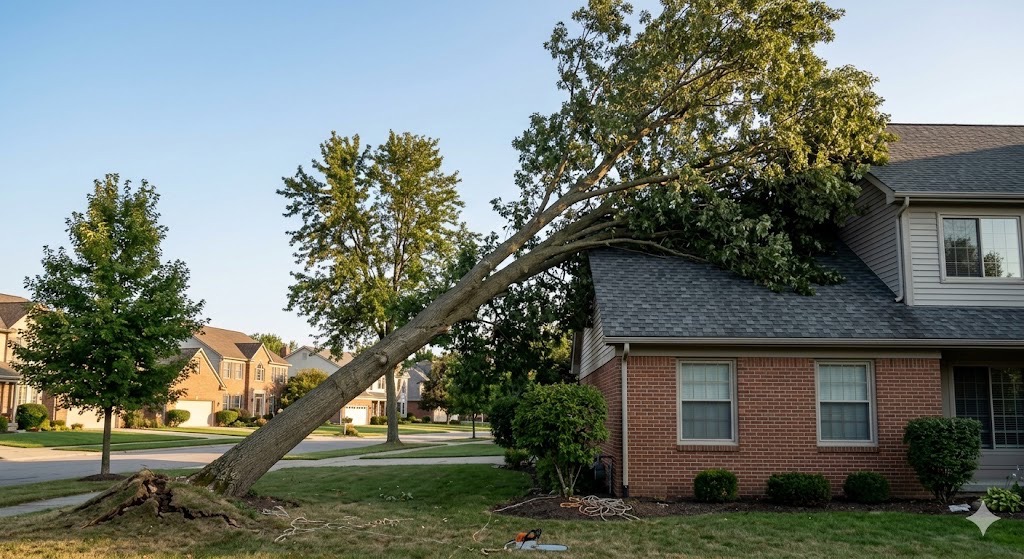
A leaning tree is not always dangerous. Some trees grow at an angle naturally because of sunlight, surrounding competition, or the conditions present when they were young.
However, a new or increasing lean can indicate root damage, soil movement, decay, or structural weakness. Homeowners should know which warning signs require professional attention.
The Lean Has Recently Changed
One of the most important questions is whether the tree has always leaned or whether the angle has changed recently.
A tree that suddenly begins leaning after heavy rain, high winds, or construction activity may have experienced root movement. This should be treated as a serious concern.
Compare recent photographs if available. A noticeable change in angle is a reason to schedule an inspection quickly.
Roots Are Lifting From the Soil
Tree stability depends heavily on the root system. If roots begin lifting, cracking the soil, or separating from the ground on one side of the tree, the tree may be losing support.
Look for:
- Raised soil near the trunk
- Newly exposed roots
- Cracks forming in the ground
- A mound of soil opposite the lean
- Movement at the base during wind
- Damage caused by excavation or construction
Avoid standing near the tree during storms if root movement is visible.
The Tree Leans Toward a Structure
The direction of the lean matters. A tree leaning toward a home, garage, driveway, sidewalk, power line, or outdoor gathering area presents a greater risk than one leaning toward an open space.
Even when the likelihood of failure is uncertain, the potential consequences may justify a professional assessment.
There Are Cracks or Cavities
Cracks in the trunk, cavities near the base, missing bark, fungal growth, and soft wood can indicate decay or structural weakness.
Decay does not always mean immediate failure, but it can reduce the tree’s ability to support its weight, especially when combined with a heavy lean.
A professional can evaluate the location and extent of visible damage.
The Canopy Is Unbalanced
A tree may lean more heavily when one side of the canopy is much larger than the other. Previous storm damage, improper pruning, nearby construction, or competition for light may contribute to an unbalanced structure.
Selective trimming may help reduce stress in some cases. In other situations, the imbalance may be too severe to correct safely.
The Tree Was Recently Exposed
Removing nearby trees can change the amount of wind reaching a previously sheltered tree. Construction may also remove roots or alter drainage.
A tree that was once protected may experience new forces after surrounding vegetation or structures are removed.
Trees affected by land clearing, excavation, driveway installation, or grade changes should be monitored closely.
When Is Removal Necessary?
Professional removal may be recommended when a leaning tree has significant root failure, trunk decay, severe cracking, or a high likelihood of damaging nearby property.
The decision should consider both the condition of the tree and what could be harmed if it falls.
Do not attempt to remove a large leaning tree without professional equipment and planning. The direction of weight and tension can make the work unpredictable.
Schedule an Inspection Before the Next Storm
A leaning tree should be inspected promptly when the lean is new, increasing, or combined with root movement, decay, or structural damage.
Tree Service of Troy provides professional assessments, hazardous tree removal, trimming, storm cleanup, and stump grinding throughout Troy and surrounding communities. Schedule an evaluation before wind and weather turn a concern into an emergency.