


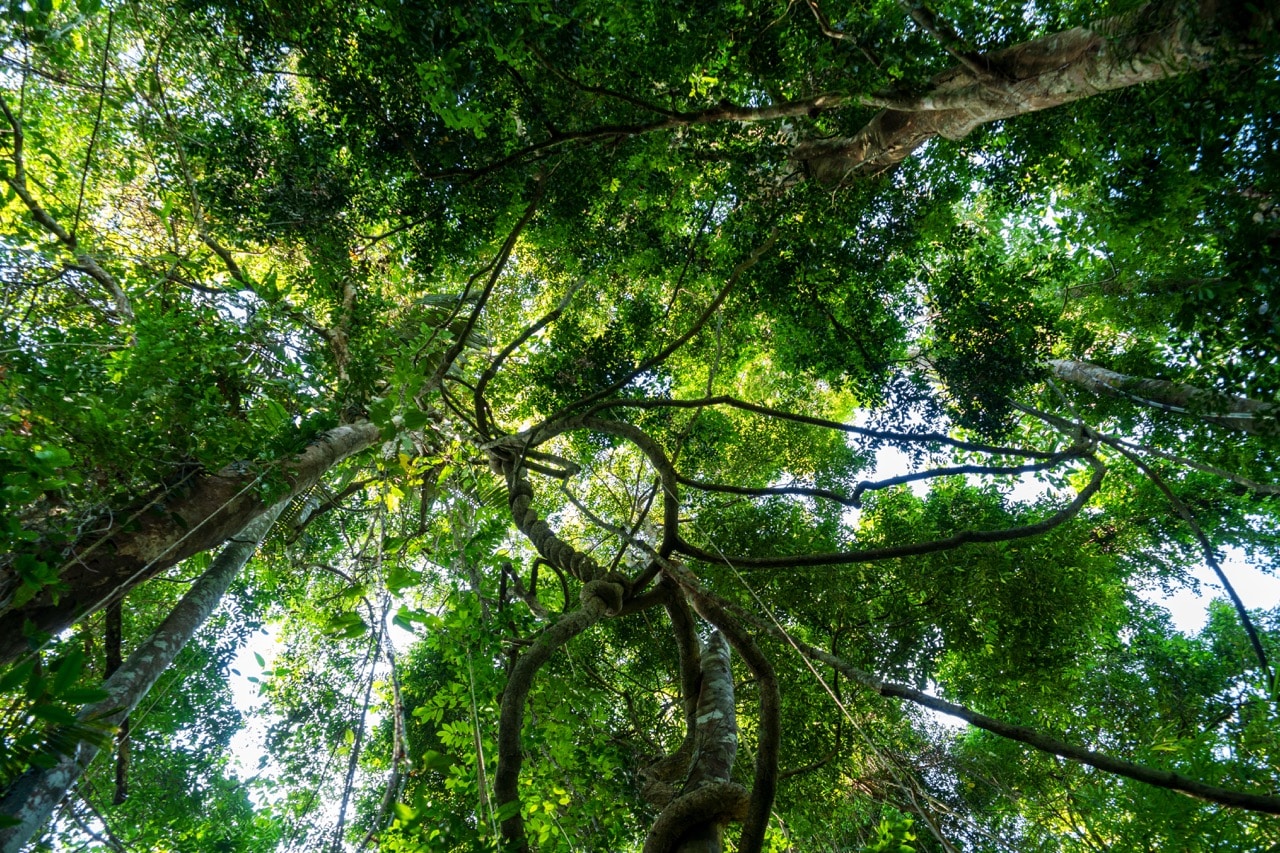
By the middle of summer, a healthy deciduous tree should usually have a fairly full canopy.
So when you suddenly notice more sky showing through the branches, leaves collecting on the lawn, or one section of the tree becoming noticeably thin, it is reasonable to wonder what is happening.
Mid-season canopy loss can have many causes. Some are temporary responses to weather. Others can indicate problems involving roots, insects, disease, structural damage, or long-term tree decline.
Hot and Dry Weather Is a Common Cause
Summer heat increases the amount of water trees lose through their leaves.
If roots cannot replace that moisture quickly enough, the tree may begin conserving resources.
Leaves may wilt, curl, develop brown edges, turn yellow, or fall prematurely.
In more severe cases, portions of the canopy may become noticeably sparse.
The problem can be worse for recently planted trees, trees growing near pavement, and trees surrounded by compacted soil.
Root Problems Can Show Up in the Canopy
A thinning canopy often begins with a problem underground.
Roots supply the water and nutrients needed to maintain leaves and branches. When roots are damaged, restricted, or deprived of oxygen, the canopy may gradually decline.
Possible causes include:
- Construction near the tree
- Soil compaction
- Trenching
- Changes in drainage
- Excess soil placed over roots
- Girdling roots
- Planting too deeply
- Repeated drought
Because homeowners cannot see most of the root system, canopy thinning may be the first obvious warning sign.
Insects Can Contribute to Leaf Loss
Different insects feed on leaves, stems, bark, or sap.
Heavy infestations can sometimes cause yellowing, leaf distortion, premature leaf drop, or branch decline.
Aphids and scale insects are good examples. These sap-feeding insects may be associated with sticky honeydew beneath affected trees.
Other insects may chew leaves or damage tissues beneath the bark.
Seeing an insect on a tree does not automatically mean it is responsible for the canopy problem. Proper identification matters before deciding whether management is necessary.
Tree Diseases May Cause Uneven Thinning
Some tree diseases affect individual branches first, while others gradually impact larger sections of the canopy.
Look for patterns.
Is the entire canopy thin, or only one side?
Are leaves changing color before falling?
Are branches dying from the tips backward?
Is there unusual spotting, curling, or distortion?
These details can help distinguish environmental stress from a disease or insect problem.
Storm Damage Can Have Delayed Effects
A branch does not need to break completely during a storm to be damaged.
High winds can twist limbs, create cracks at branch unions, or damage roots as the tree moves.
Some injured branches remain green temporarily before declining later in the season.
That is why a tree can appear to survive a storm and then begin losing foliage weeks afterward.
Trees Sometimes Reduce Their Own Canopy
Not every falling leaf represents serious decline.
During difficult growing conditions, some trees shed leaves to reduce water demand. Older interior leaves may also drop while healthier exterior foliage remains.
The key is severity.
A small amount of seasonal leaf loss may not be concerning. A canopy that suddenly becomes significantly thinner deserves closer attention.
Check for Dead Branches
One useful way to evaluate thinning is to determine whether branches are losing leaves or actually dying.
Dead branches may have brittle twigs, missing buds, peeling bark, or no foliage at all.
Large dead limbs can eventually become a safety concern, particularly when located above roofs, driveways, sidewalks, patios, or play areas.
Avoid climbing the tree or attempting to remove large overhead limbs yourself.
When Should You Call a Tree Professional?
Consider scheduling an assessment if canopy loss is substantial, continues from year to year, affects large branches, or is accompanied by cracks, cavities, fungal growth, leaning, root movement, or significant dieback.
A professional assessment can help determine whether the tree needs monitoring, corrective pruning, plant health care, or removal.
Tree Assessments in Troy and Metro Detroit
Summer is a good time to notice changes because the tree’s canopy is fully developed and problems can be easier to compare.
If a tree on your property looks significantly thinner than it did earlier in the season, Tree Service of Troy can inspect visible tree health and structural concerns.
Call 855-648-7337 to request a free estimate and professional tree assessment.