


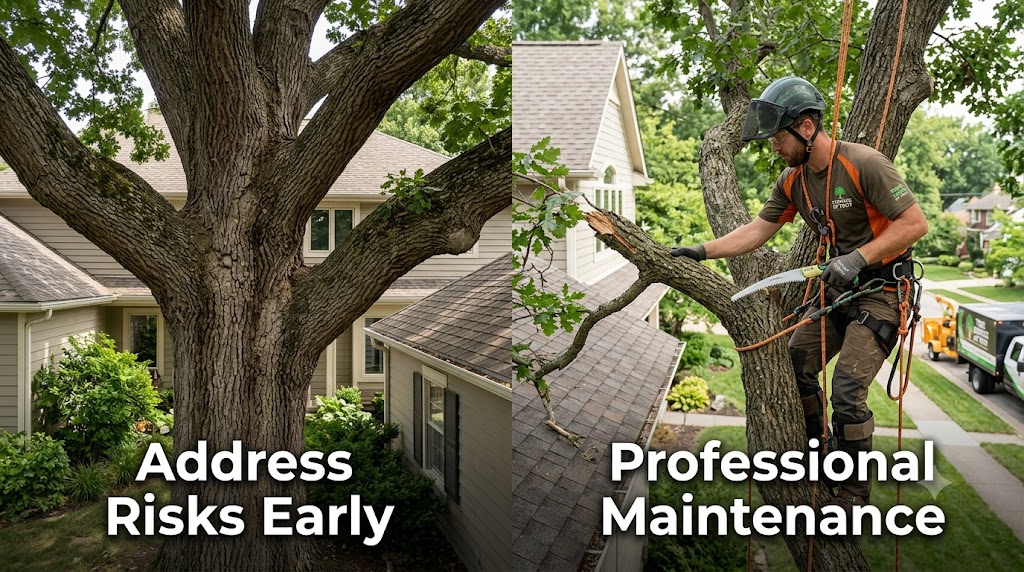
Trees add shade, character, privacy, and value to residential properties. However, they are also living structures that change over time. Branches grow heavier, roots encounter changing soil conditions, and weather can gradually weaken trunks and limbs.
Preventive tree care helps homeowners address these changes before they lead to falling branches, property damage, or emergency removal. Instead of waiting for a visible failure, homeowners can use regular inspections and professional maintenance to manage potential concerns early.
Tree Problems Often Develop Gradually
Many serious tree concerns begin as small, easy-to-miss changes. A branch may develop a crack at its attachment point. Decay may spread beneath damaged bark. Roots may become compacted or damaged during landscaping and construction.
The tree may continue producing leaves even while its structural condition declines. This is why appearance alone does not always provide a complete picture of tree health.
A professional tree evaluation can look for warning signs such as:
- Dead or hanging branches
- Cracks in trunks and major limbs
- Cavities or hollow areas
- Fungal growth
- Root damage
- New or increasing lean
- Peeling or missing bark
- Unbalanced canopy growth
Identifying these issues early may provide more options for managing the tree.
Preventive Trimming Can Reduce Property Risks
Branches growing toward a roof, garage, driveway, or outdoor living area may become more hazardous as they increase in size and weight.
Professional tree trimming can remove dead limbs, improve clearance, manage overgrowth, and support a more balanced canopy. The purpose is not to remove as much growth as possible. Proper trimming focuses on specific concerns while preserving the tree’s natural structure.
Regular maintenance can also make future pruning more manageable. Waiting until branches become very large may require more complicated cuts and create larger wounds in the tree.
Storm Preparation Starts Before the Forecast
Homeowners often think about tree care only when severe weather is approaching. At that point, appointment availability may be limited, and there may not be enough time to safely address a dangerous tree.
Preventive care allows homeowners to prepare before thunderstorms, strong winds, heavy rain, or winter weather place additional stress on weakened branches.
A tree with dead wood, root damage, or a split trunk may remain standing in calm conditions but fail when wind moves through a full canopy. Addressing the problem early can help reduce the chance of sudden damage.
Healthy Roots Need Protection
Preventive tree care includes more than trimming branches. Roots need access to moisture, oxygen, and uncompacted soil.
Parking vehicles, storing materials, or operating heavy equipment beneath a mature tree can compress the soil. Construction, trenching, and changes to the soil grade may also damage or bury important roots.
Homeowners can support the root zone by:
- Limiting traffic beneath mature trees
- Avoiding deep digging near the trunk
- Keeping mulch away from direct trunk contact
- Watering slowly during extended dry periods
- Protecting exposed roots from mower damage
- Monitoring changes after construction
A tree’s stability and long-term health depend heavily on what is happening below ground.
Preventive Care May Help Preserve Trees
Not every damaged or declining tree requires removal. Some trees can remain valuable parts of the landscape with selective pruning, monitoring, and improved growing conditions.
Early evaluation may make it possible to correct branch structure, reduce excess weight, or address environmental stress before the tree declines further.
When deterioration becomes extensive or the tree presents an unacceptable risk, professional tree removal may be the safer choice. Preventive inspections help homeowners make that decision before failure occurs.
Routine Maintenance Can Improve Curb Appeal
Tree care also affects how a property looks and feels. Low branches, dense overgrowth, dead wood, and crowded canopies can make a yard appear neglected or smaller than it is.
Thoughtful trimming can improve visibility, open outdoor areas, and create a cleaner landscape. Healthy, well-maintained trees can frame the home and provide attractive shade without overwhelming the property.
Avoid Expensive Emergency Situations
Emergency tree work can become necessary when a tree falls, blocks access, or damages a structure. These situations are stressful and may involve unstable wood, difficult access, or coordination with utility providers.
Preventive care cannot stop every storm-related failure, but it can help identify many avoidable risks in advance.
Tree Service of Troy offers inspections, trimming, removal, stump grinding, and storm damage cleanup throughout Troy and surrounding areas. Scheduling routine care can help homeowners protect their trees, property, and peace of mind.